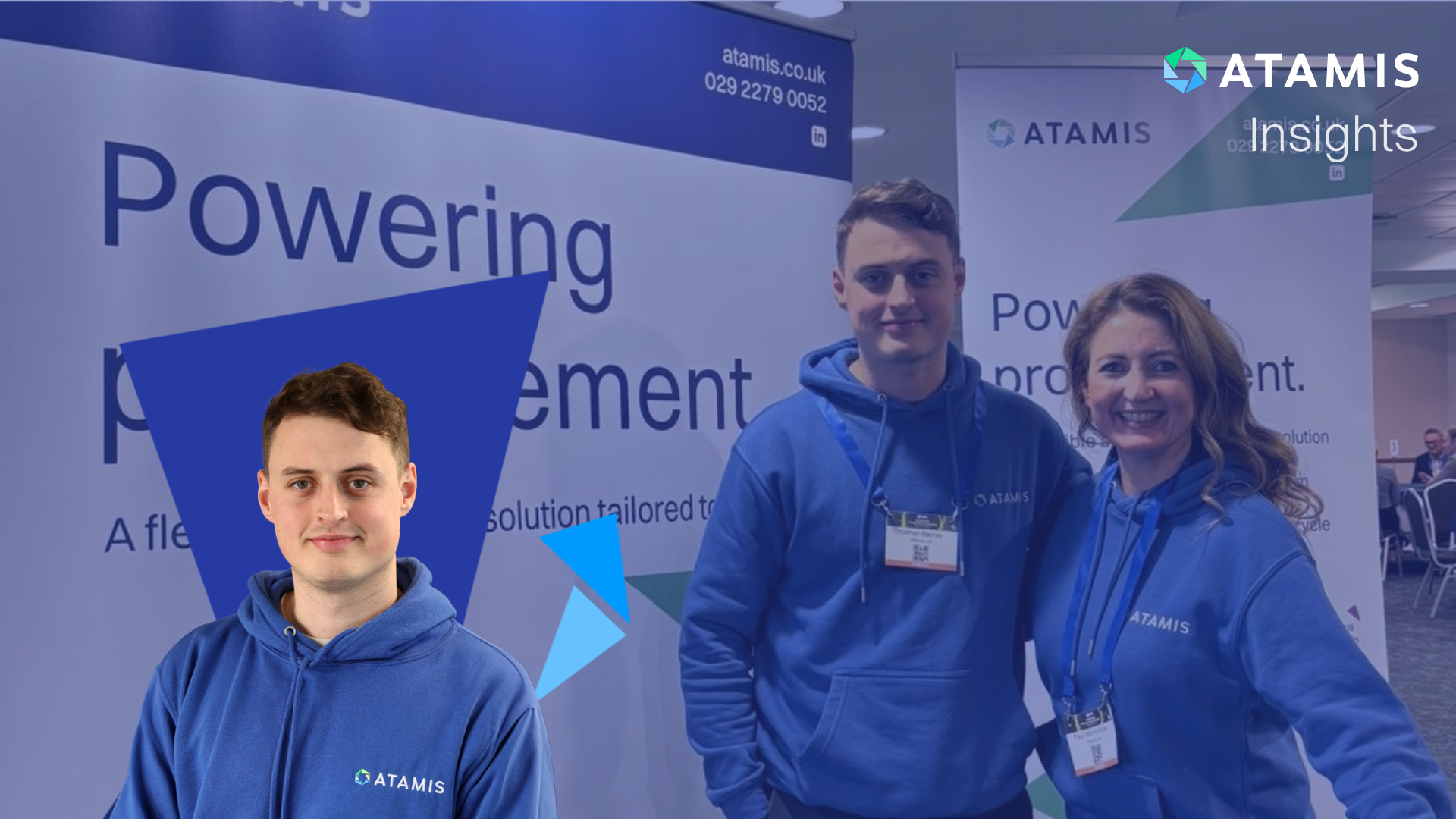
Last Tuesday I attended the CIPS Procurement & Supply Futures Conference 2025 with some of the Atamis team and I’ve been thinking about it ever since.
When you get the opportunity to speak to procurement leaders from up and down the country, you get a real sense of the pressure and possibility shaping the industry. But there’s something about being in a room full of people who live and breathe procurement that sharpens the picture even more.
Here are some of my biggest takeaways from the event, both from panels and talks I was lucky to see and also conversations with individuals throughout the day.
Number 1: AI Is Here, But It’s Not Replacing Anyone Just Yet
It was no surprise to see AI dominating the agenda, but what was refreshing was how balanced the conversation was. Rather than panicking about jobs being lost, there was a sense of opportunity and realism in the room.
In terms of the biggest anticipated impacts of AI, speakers expect the use of AI to unlock greater operational efficiency in a number of ways but predominantly through the automation of manual tasks. This is one of the topics I spend a good amount of time discussing with procurement teams looking for a tailored solution, but procurement professionals can’t execute strategy or drive innovation if they’re bogged down in manual data management or analysis. Teams need tools that empower their ability to draw value, not hinder it.
The idea that teams will learn new skills as a result of AI’s presence in the workplace was also discussed. Teams armed with AI will have the capacity and the need to expand their skillsets to suit the requirements of tomorrow. I appreciated this avenue as so often you hear people concerned that AI will take jobs but I believe the reality will be that it will evolve them.
Equally, the function of AI to support quicker and more effective risk identification and decision support was well-trodden. This is also central to our own implementation of AI throughout our Source-to-Contract software. Generally, the consensus was that AI will improve productivity across the board for the procurement professional.
It’s not about replacing people, it’s about freeing them up to focus on work that really moves the dial. That includes deeper supplier relationships, more meaningful ESG delivery and driving value across the business (I’ll come back to this). What struck me was how aligned these ambitions are with the technology we’re building. Atamis’ clients are already automating sourcing admin, tracking risk exposure and generating real-time insights that used to take weeks to gather.
Number 2: Procurement Must Be The Voice of Value
Another strong thread throughout the day was the evolving role of procurement as the voice of value inside organisations. It’s no longer just about cost control. Procurement teams are being asked to:
- prioritise social value
- mitigate supply chain risk
- drive innovation
- champion sustainability
- foster digital transformation
This may be a big ask, but it’s also a massive opportunity.
When procurement is empowered, given the right tools, support and seat at the table, it becomes one of the most strategic functions in the business.
I had several conversations throughout the day where people told me their biggest barrier to delivering value wasn’t ambition, it was capacity. The right technology doesn’t just digitise procurement, it liberates it. It turns manual blockers into automated workflows. It brings scattered data into one place. And it lets procurement professionals spend more time on supplier strategy, not spreadsheet management.
Number 3: ESG
There was a real sense of urgency around ESG and rightfully so. Multiple speakers echoed the same message: if procurement doesn’t lead on sustainable, ethical supply chains, no one else will. The truth is, whether on an organisational level, a national level or a global level, we won’t hit ESG targets without procurement teams stepping into the spotlight.
Here’s the catch: you can’t manage what you can’t see. And you definitely can’t influence what you can’t measure. Building ESG into your sourcing, contract and supplier relationship management processes is essential. Procurement needs data, accountability and the right metrics baked into the process, not tacked on at the end.
Final thoughts
Procurement is already transforming, but not everyone is moving at the same pace.
The most forward-thinking teams I met at CIPS Futures 2025 weren’t just talking about change, they were actively enabling it. They were investing in the right systems, giving their teams better tools and demanding more from their supplier relationships.
That’s where we come in.
Atamis’ solutions have been built with future-focused procurement teams in mind. From intake to contract award, supplier onboarding to KPI tracking, we give you the visibility and control you need to turn ambition into action. Whether it’s embedding ESG metrics into your tenders, automating contract renewal alerts or spotting issues before they become risks, we’re here to make sure your software helps, not hinders.
So if the themes of CIPS Futures 2025 resonated with you, whether it’s AI, ESG or redefining value I’d love to show you how we’re helping other teams just like yours put those ambitions into practice.