
 Atamis’ end-to-end solution is built to target your specific pain points and drive efficiencies.
 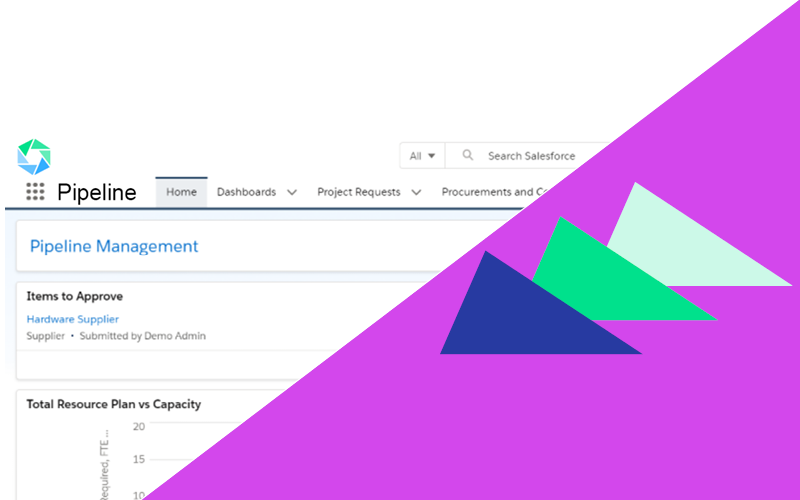 Our Pipeline App empowers your team to plan ahead and forecast for upcoming procurement activities.
 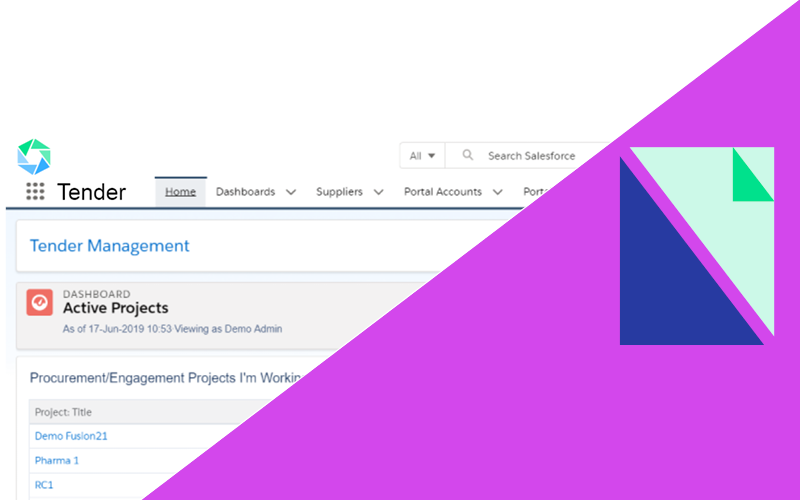 The Tender App allows your team to visualise all sourcing activities within your Atamis platform, from issuing tenders to receiving bids.
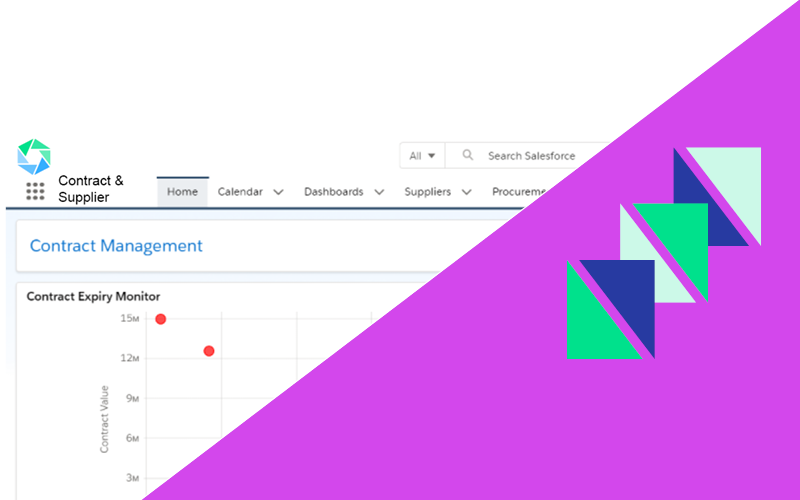 Our Contract & Supplier App puts your team in firm control of your key supplier relationships and provides a central repository for all contracts.
 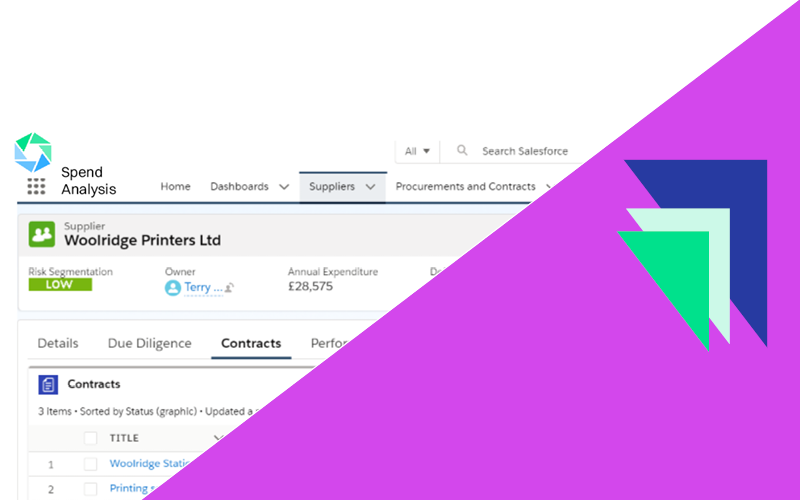 Our Enhancers ensure your solution is tailored to your needs. Pick and choose additional functionality that fits your requirements.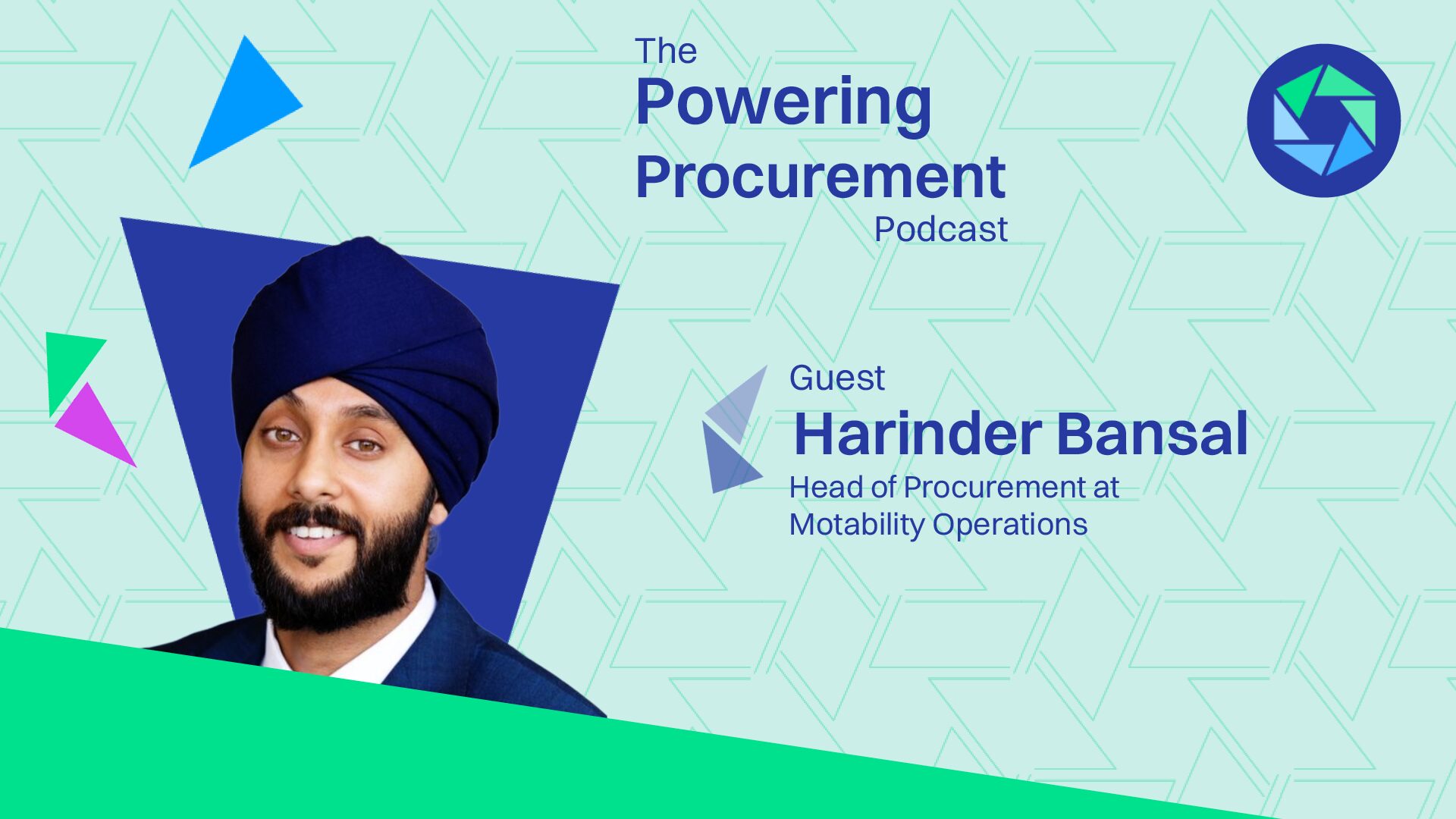
“There’s a lot to learn, but the learning never stops.”
In this episode of Powering Procurement, host Sian Lloyd sits down with Harinder Bansal, Head of Procurement and Third Party Risk Management at Motability Operations – one of the UK’s largest fleet operators, supporting over 800,000 disabled customers.
Together, they explore how procurement can deliver environmental impact, create social value, and help businesses achieve ambitious net zero goals, while still meeting commercial expectations.
What You’ll Learn
- How Motability Operations is embedding ESG and sustainability across procurement policies and processes
- Why pursuing B Corp certification is helping drive purpose-led procurement
- The balance between cost efficiency and sustainability in supplier decisions
- How procurement can use data and AI to set and track Scope 3 emission targets
- The importance of supplier engagement and shared accountability in achieving long-term sustainability goals
- How employee networks like REACH (Race, Ethnicity and Cultural Heritage) foster inclusion and belonging in the workplace
- The personal and professional value of purpose-driven leadership in procurement
Find on Spotify
Find on Apple Podcasts
Watch on YouTube
Learn more




Are you looking for tailored procurement software?
Find out how our solutions can support your team in achieving strategic objectives today. Book a demo.
Get a Demo
Read Full Episode Transcript
Read Full Episode Transcript
There’s no reason why we can’t set scope three targets on a supply chain further down the line and I guess get that transparency to suppliers on what we expect over the next 5-10 years in terms of progress from them and then that’s when you get into the realms of data. What data can you get hold of? Where can you use data to predict trends and challenges along the way to meet your ambitions? Hello and welcome to Powering Procurement, a podcast by Atomis where we unpack the world of procurement and supply chain management with the help of leading experts. I’m your host Sian Lloyd and this is the Atomis resident expert Gareth Birch.
With nearly 20 years of experience in procurement I may be billed as the expert but believe me I’m here to learn too. Each episode with our expert guests will see us diving into the world of procurement, understanding the opportunities and challenges facing the sector. And we’ll explore easy wins and longer-term strategies to help you rise to the challenge of driving value through your work while showing the power of procurement.
So let’s get started. Welcome to Powering Procurement. Today we’re joined by Harinder Bansal, Head of Procurement and Third Party Risk Management at Motability Operations.
Harinder has led procurement teams across sectors including retail, pharma and consulting and now plays a key role in one of the UK’s largest fleet operators. Motability Operations supports more than 800,000 disabled customers and is leading efforts to make electric vehicles more accessible. Alongside procurement and risk Harinder also heads up Motability’s Reach Network, championing equity and inclusion and serves as a trustee for Steps Charity Worldwide.
His work really sits at the intersection of purpose, innovation and sustainability and today we’ll be exploring how procurement can deliver environmental impact, create social value and help businesses achieve ambitious net zero goals. It’s lovely to meet you Harinder and thank you for joining me on the podcast. Pleasure to be here, Sian.
Well I’m really looking forward to our conversation over the next half an hour or so but to begin it would be great to hear a little bit more about you. Your role, it sounds pretty unique really and almost more of a vocation if I could say than a career, something that you’ve certainly made your own. How did you get to this point and come to be in this position? On a personal level I actually studied mechanical engineering so I used to be a mechanical engineer about 12 years ago and like many other people you fall into procurement don’t you? I realised early on it wasn’t for me and I’m very grateful to have started my procurement career at Tesco head office where there was almost the perfect role for me to make that transition into procurement by buying in mechanical and electrical services in and these would be supplies that would have supported us with new store development, refurbishing existing stores and so on and because I knew a little bit about the technicalities of these things and the nuances that involved it allowed me to transition from a technical into commercial role and build my career from there really.
So as you say I’m very fortunate I’ve had a career in different industries, different size procurement teams, different maturity of team to get that breadth to help me where I am today. Well that’s fantastic, congratulations on everything you’ve achieved so far and really looking forward to hearing about your priorities certainly in the role that you’re in at the moment and everything you’ve achieved and we’ve had quite a few conversations over the course of the Parent Procurement Podcasts with senior leaders in procurement and certainly when we’re talking about sustainability you know sometimes we do get the sense that there has to be a fight sometimes to get sustainability on the agenda but in terms of the organisation that you’re with I get the sense that sustainability really is a focus. So do you think that has helped you in terms of the way that you then look at procurement and how you approach procurement particularly in your current role there? Yeah I agree you put it really well Sian, you know the same role in another company I might be fighting to get this on the table on the agenda but it’s an opportunity to be part of the journey because the company really sees that as an opportunity organically and the reason why I’ve done that is and I guess just to set the scene if the audience isn’t aware Motability is a UK only company and it supports over 800,000 disabled customers in the UK so the way it works is if a disabled person is in receipt of the disability allowance from the government then they can either take that as income or they can trade it in for a car lease, a power wheelchair, a scooter or wheelchair accessible vehicle and the idea behind why this all started 50 odd years ago is to keep disabled people independent and mobile and give them that freedom essentially and I guess with that in mind Sian that’s why I really believe that we’re a truly purpose-led business, lays a focus on keeping our disabled customers mobile and independent as I say but also keeping customer satisfaction high.
Every disability is unique, not every disability is physical and so it’s really upon us really to be their their biggest supporter in their lives and really make that difference so I want to set the scene with that and as you say we are one of the UK’s largest fleet operators given that we serve over 800,000 customers in the UK with that comes a significant amount of scale what we want to do is use our scale for good and we recognize our duty to protect the planet and hence why we now have a huge focus on ESG sustainability and we actually have a dedicated team focus on just that Sian, just purely focused on impacting sustainability and embedding I guess good practice across the business. You know it’s great to hear that purpose from you Harinder and to really set it in the context but yeah do you carry on because I think you’re going to say about how really that approach then comes to the fore. Yeah exactly so we’re in 2025 now so last year we became the UK’s first bee movement builder so I guess just to set the scene on this a B Corp company is one that has been verified by a company called B Lab and essentially what they do is go in and assess companies to a high standard when it comes to ESG principles and we made that application last year to walk this journey and I guess fast forward to mid 2025 we’re hoping to you know get some outcomes on where we are with our application when it comes to B Corp because we want to use our scale for good and be recognized in the industry and really set the standard hopefully for others in the automotive industry to follow and I guess in procurement it is refreshing that we haven’t had a had a fight on our hands to kind of get this on the radar and so we’re trying to use the opportunity the momentum to really embed ESG and sustainability within our procurement processes our policies and make sure that it’s at the heart of what we do.
So the B Corp status and application is ongoing at the moment is it horrendous for you I mean it’s certainly something I’ve become aware of more I mean even seeing on social media companies in lots of different sectors really shouting about it when they do achieve this status it’s really something that it’s not easily attained is it? It’s not the bar’s very high they set very high standards and in theory actually not every company can achieve it because of those high standards so it’s something to aspire to and like anything in life if you might fail at the first hurdle it’s important to see that progress year and year and keep trying again to achieve those standards and from working with the impact and sustainability team B Lab and there’s a climate consultancy we also work with have been very supportive on this journey recognising the good things we do today around the social aspect the social appeal if I can call it that supporting disabled customers but also the aspirations we have when it comes to environmental practices. I mean it’s great that we’re talking about this today because it no doubt will be inspiring to other people as well and you know this podcast is all about sharing experience and knowledge that people can learn from the experience of those who we’re chatting with. When you were talking about sustainability and your approach and you know it might be relevant towards the sort of application you’re going for now as well from what you’re saying it seems sustainability is at the core is that something that is thought about at the beginning of decisions as opposed to being something that you know might be bolted on at the end if you like.
Yes good question it’s an ongoing journey if I can put it like that whilst we’re doing what we can to embed it within policy procedures processes the proof really is in the pudding on when we’ve made decisions the outcomes that we need to see from suppliers what’s what’s different this time now that we’re talking more about sustainability and it can be a challenge you know given that most companies now you have a huge focus on costs getting more value for money there is that dilemma isn’t there around if something costs ten percent more but it’s better for the environment how do you make a call on that decision given that you’re focusing on costs and what we can do as a function is get the data to support those decisions and encourage the business to make the right choice that they feel represents overall value for them but to do that there’s so much groundwork that needs to be covered off first procedures policies practice talking about it more making sure it’s embedded in things like scoring matrices when you’re looking at supplier selection so there’s a lot of groundwork we can do and I guess the rest is down to encouragement and sharing where good case studies have actually happened in the business sharing that to inspire other parts of the business as well yeah thank you for being so candid on that you know it’s great to hear that that there’s work in progress effectively but you said about sharing experiences and how important that is you know are there any that you could perhaps share with us today any particular case studies where really you know you’ve championed that sustainable approach and perhaps even challenging commercial expectations but but you’ve got there in the end yeah there is one example that comes to mind in a previous company which i’m proud of because it’s for me it does represent what you say where we have to balance commercial expectations and making a good sustainable decision as well so at a previous company we like many companies when it assets so laptops mobile phones screens become end of life companies need to dispose of them responsibly certainly with things like laptops they’ve got hard drives they hold data they need to be securely wiped we used to pay a supplier just to collect the waste they would wipe wipe i guess data cleanse um the hard drives and make sure there’s nothing confidential on there they’ll wipe securely wipe the hard drives and then dispose of it wherever it needs to go landfill for example it was a paid service as well so we paid someone to take this waste away i saw an option in the market where i propose an alternative method of still meeting a requirement which is finding what’s called an itad supplier so itad stands for it asset disposition and it essentially does the same thing it’s a company that collects the waste but what’s different is it first attempts to refurbish say for example a laptop it attempts to refurbish it first and then try and remarket the it asset on the open market so the idea is wherever we can save something and avoid it going to landfill that’s a success and if it has been able to resell a laptop successfully say for argument’s sake 100 pounds we had a game share model and we would share some of that profit so there’s something in it for them there’s something in it for us a decision was then made in itself that income that we then generated from that do we then donate it to charities or fund new laptops for schools and then you can make a more positive story on the back of that and i guess just to build on that example further sean if a laptop was beyond economic repair and sometimes it can be they would then take a reharvested and reused for new equipment but i hope you can see that both approaches try to minimize things going to landfill and support you know i guess the circular economy so i guess this supplier and most itad suppliers nowadays on the market can not only do this but then they can report on their sustainability performance so imagine having a set of kpis from the supplier that says the amount of energy saved by not having to produce new laptops new equipment plastic transport pollution that’s attributed to that water usage etc so that goes way beyond the commercial aspects that it’s almost too good of a new story not not to be part of and not not to share yeah absolutely it’s great to hear that you’re sharing it with us today and the laptop that i’m on today is a sort of a saved refurbished laptop actually so it’s great isn’t it when you feel that you can do something to be part of the circular economy so definitely something in it for everyone and i think that was a really good example thank you harinder i suppose taking us to the next part of of the discussion and scope three emissions is something that obviously we’re all concerned with and we’ve been talking about actually quite a bit on this podcast as well certainly managing them you know what’s come across is that that can be a really big challenge certainly for procurement teams because so much of the responsibility there lies with suppliers doesn’t it be interested to see sort of and hear actually just initially you know what your thoughts are on that yeah so it’s a hot topic isn’t it and certainly for us we’re really at the start of this journey but we have made some progress so for example we now have on our website a supply code of conduct and that incorporates all sorts of things like human rights our expectations around the expectations we have at a bare minimum for supplies but we want to build on that to encompass our expectations for sustainability perhaps things like minimum reporting standards some of the ideas that the procurement team have have is things like getting new suppliers to sign up to the supply code of conduct as that evolves at the same time so they they know what it means to do business with motability we also have much longer term plans on things like what does sustainability mean in practice when it comes to contracts so are there sustainability style contract clauses we can include that helps encourage the supplier to make progress in this area and if they don’t what does that mean for that relationship as a whole there’s all sorts of things that procurement teams can do and again some companies will be further than others along this road and i’ve always felt it’s really important to network as an individual but also as a procurement team with other companies to inspire each other to learn from each other um because it’s a joint challenge i think that answers the question i can build on that yeah i think absolutely what i’m taking from that is it is it’s taking people with you as well isn’t it and learning from from other people’s experiences there as well and and working out you know what what works in practice i suppose yeah and i also think it’s a good opportunity to be creative so whilst companies might set their own net zero targets they might set their own scope one two three targets to support that net zero ambition there’s no reason why we can’t set scope three targets on a supply chain further down the line and i guess get that transparency to suppliers on what we expect over the next five ten years in terms of progress from them and then that’s when you get into the realms of data what data can you get hold of where can you use data to predict trends and challenges along the way to meet your ambitions great thank you well let’s talk a little bit about motability’s reach network now then i certainly don’t know much about this and it’d be great to hear a bit more about it from yourself you know tell us what is it what is the network yeah sure so reach stands for race ethnicity and cultural heritage and it’s one of four employee network groups in motability the more common term for i guess a network group is erg so employee resource groups so if anyone’s heard of ergs but not a network they’re the same thing and essentially what is shown is internal employee groups and members within the groups have the opportunity to share experiences to create a safe space for each other and i guess for reach particularly help raise awareness of various cultural or religious events or occasions that different people might have for me it’s really about creating a safe space and i guess certainly in bigger companies where you’ve got offices around the world there might be more people similar to you whether it’s your origin your religion similar family background in a completely different office around the world and it brings i guess that global challenge uh more of a local one where you know exactly who your colleagues are and you’re able to share those experiences um we have a slogan in reach which is seen heard valued so that’s what we try try and live up to and and what’s the response been like we’ve got a good sign up actually and we meet up as a network generally virtually um once a month for about an hour and we talk about all sorts of things so certainly um at the last one we were we’re talking about ramadan so our muslim colleagues um were going through the month of ramadan and they were actually came to the network meeting to talk about how to celebrate ramadan why they celebrate it um what they do as a family to celebrate it i learned something new recently which is actually if you’re muslim you’re there are exemptions to ramadan for example if you’re pregnant or if you have a disability or you’re not well within yourself and that’s what reach is about to learn about what’s important to other people when it comes to culture brilliant thank you and also in the introduction i was mentioning about the the steps um charity as well it would great to hear a bit about that because that that’s a worldwide organization isn’t it it used to be it’s it’s recently changed to uk only but it still has longer term worldwide aspirations um steps charity is a charity very close to my heart so i joined as a trustee and director of steps because my youngest daughter was born with a with a condition called talapies more commonly known as clubfoot and clubfoot is one of the the many lower limb conditions that the charity supports so if anyone had a child that was born one of these conditions um in the hospital it’s likely that the hospital clinician would have signposted those parents to steps and i guess i wanted to give back in in a way to a society where i could because the charity really helped me and my wife when our youngest was born and i’m really grateful today for the the the support that they gave us so it made complete sense for me to join try and give something back where i could try and be useful if i can and recently i i became the chairman um of the charity which comes with some legal responsibilities so it was a bit daunting at first but it’s one that i take seriously my spare time it’s something very proud of and i guess just to build on the reach angle slightly if i may um as a sikh one of our key values in our religion is something called server and that translates in english to doing something selfless doing something to contribute to society so i guess by me taking on this role it was one of my many ways i could do what we call server something that’s selfless absolutely um i i feel it’s really important to try to give back and certainly um i try to well i do support a number of charities and have been an ambassador for a number of charities over the years which which like you i find just very very rewarding to feel if you can just make some small difference um and there’s so many so many great charities doing really important work now uh sometimes you’re filling those gaps quite frankly aren’t they in services as well in terms of if somebody’s somebody’s listening and think oh you know steps could perhaps help me or somebody i know how would people link in or find out how they might be able to be supported you can reach out to me afterwards and steps is one of many charities if you are also interested in supporting other charities perhaps ones that are more located close to home for example there’s a website called charity jobs for example which regularly advertises volunteers roles for ambassadors as you say sean to things like taking on a trusteeship and i’ve always felt that it’s a good way to um i guess spread your wings develop new skills continue your network and beyond your immediate procurement profession because it certainly helps me in my career so far by learning different things yeah absolutely um thank you and it’s great to hear hear about it perhaps you know steps might not be one that people are so aware with about because there are so many different charities aren’t they so it’s brilliant that we’ve been able to hear a little bit about it today and wishing you all the very best with with your work with that um as chair it’s a it’s a big job isn’t it you know it does take time and it’s great to see that commitment and i’d be interested to know really whether work the work that involved with there through reach network also with steps um you know all adds to who you are harinder and was probably your your leadership style as well i mean do you think that um the the other involvements that you have does play into to your day-to-day approach even in in procurement as well um i would say so because what it gives me um a bit more confidence than i had before so i am one of those people where from time to time imposter syndrome might kick in you might feel that actually i can’t do this why should i apply why would they pick me but certainly from exposure to reach um being part of steps it’s given me a bit more of a growth mindset and a bit more self-belief sean and so i would say to anyone you know back yourself you’re probably a lot better than you think so don’t don’t let be unlimited for yourself certainly if i build on my chairman experience um i’ve had to interview ex-ceos ex-cfos and these are people with a cv probably 20 20 pages long you know 20 years experience on me so that was very daunting to me but i i learned a lot from that and i guess what what do you get from that you get a bit more exposure a bit more resilience and you learn more about the world so steps that’s charity sector that’s charities commission i’ve not i’ve not had a an exposure set before um motability that’s financial services automotive i’ve worked in pharma retail before and when you diversify your experience in even beyond your career i think you certainly build a picture on how the world works um it is a massive machine or spider whatever the analogy is and i guess we’re all trying to build that picture and how everything lives together so certainly for me at steps and reach i get more of that exposure help me as a manager decide a manager i want to be um i’ve worked for some fantastic people before sean and equally i’ve worked with very challenging ones and i guess one would take all that experience to decide the person they want to be the manager they want to be and that’s why in all my job descriptions for example i advertise in bold that this team values psychological safety net because i don’t feel i’ve always had that in the past we win and lose together you know that’s our motto and i’d like to think that the team loved the team because of that that approach it’s really great to hear about that growth mindset as well and how we do grow don’t we in so many different ways from the people that we meet the different teams that we’re working with and the different experiences that we get i mean i’d be interested to know you know what’s been your scariest moment harinder has there been absolutely anything that you look back on and now you think oh my goodness how did i get through that yeah um what would it be i put you on the spot sorry i mean even if i think of my first job going to joining tesco into a procurement role i didn’t know anything about procurement i didn’t know anything about business i’d only ever study pressure drops in piping and things like that from from engineering but i guess 12 13 years on um i’m still here because i’ve been able to adapt and learn along the way certainly from being in retail first and then joining the pharma industry and later consulting um i’ve learned that um it’s important to be adaptable but i’ve learned to adapt as well and it says the same goes sean um if you surround yourself with like-minded individuals with a similar mindset people that are willing to help and be that that friendly shoulder if you need to reach out to them that goes a long way to supporting you yeah absolutely it is key isn’t it and i um i remember having to admit in a an interview very early on in my career that the program i was applying to work on i actually hadn’t ever watched and that was simply because at the time the tv aerial was was turned to a different region but uh yeah you sort of go for it and i didn’t get that job but actually i did get something else later on so you never know where where paths take you do you um in terms of though i suppose staying in front of the curve for procurement professionals who are going to be listening to this podcast i mean have you got any tips in terms of you know what they’re going to need for for the future i know it’s a big question but people need to prepare now don’t they what if they need to to be able to handle things in the future yeah i guess step one is recognizing it’s important and then and therefore it’s important to kind of embed it where you can within your role within your function and then certainly for me i don’t know everything about sustainability and i still don’t and so building on that just just self-reflect on what you do know what you don’t know and then look to invest in yourself invest in your team perhaps with things like sustainability training to trick really try and take your knowledge to the next level so you’re then best equipped to support the company what i’ve done recently is also network on things like linkedin to slightly meet other people where they’re on that journey to me that journey of progress that journey of learning more maybe people in companies with similar aspirations to us just so you kind of further to my other point surround yourself with those individuals that might be able to help you and you can help them at some point i guess the the old approach to procurement has always been like the key kpis and savings for example and perhaps now that sustainability is really on the agenda for most companies we should use this as an opportunity to take a step back because if the direction of travel is sustainability is now important and esg is key how do we work back from that to really measure ourselves to support the company on that is it sourcing number of supplies um who are local businesses that that kind of addresses the the social aspect of esg these are new metrics that we probably haven’t considered before so we need to move beyond cost savings to meaningful things that stakeholders will care about going forwards yeah that that’s a really great insight and are there any particular trends that you are seeing that are emerging trends there’s certainly more suppliers out there year and year that seem to specialize in providing esg and sustainability data so it’s certainly becoming more of a busier market and with that i would expect esg and sustainability style standards to evolve as well and with that procurement practices and procedures to evolve on the back of that as well so i can imagine that as a trend and i guess as the market becomes more busy naturally you’ll probably get more consolidation of mergers and then market will probably settle at some point but this is all around data sean so essentially all of these providers are providing data so i expect that data quality to improve the number of data points to be more accessible to provide things like moving away from static questionnaires which are outdated the minute they’re filled in to real-time predictive analytics you know we’re in the era of ai now so you can easily see ai playing a part in all of this too i’m thinking more on a wider scale certainly in the uk we’ve got the zed mandate we’ve got companies committing to things like their own net zero carbon targets i expect more of that to be a thing more companies to adopt science-based targets to really push the needle on that and i guess the other trend i can think of is i’ve never worked in public sector sean but i’ve often been fascinated between the different practices that private and public sector have when it comes to procurement and i wonder when it comes to esg and sustainability given the good standards that they have in public sector would we see a convergence over time and perhaps there might be some sort of i don’t know um mandatory practice within the private sector so the government seem to be pushing i just say sustainability agenda with that regard in the private sector i don’t know i’m thinking off the top of my head that’s really interesting and well it’s been fascinating talking with you and getting to to understand a bit more about you what makes you tick as well harinder thank you for sharing so much with me during this podcast uh we are coming towards the end of our time and it’s a question that we always pose to our guests as we close the podcast you i think we we want everybody really to sort of understand as much as they can about the procurement sector but also to shine a light on it and you know to recognize like so many sectors there are issues around retention and recruitment but really you know to show the different opportunities there are particularly for the young people who may be considering their futures and their future careers so you shared some of your story with us which has been great to hear and just to end on on a positive note it’d be lovely to hear about why now after all these years you are pleased that you are in a career in procurement what a question no no pressure you can answer in whatever way you want i’m really pleased that i made the step i felt really brave at the time from being honest to take myself out of that engineering track to do something completely different when it wasn’t working for me and i guess that’s that’s a lesson in itself you know you leave college you leave university with that plan in mind and it’s always good to have a plan resilience comes from when that plan fails what’s the plan b because you’ve never had to think about it you’ve never had to face that that life-changing experience before and i had to do that and i was uh really nervous at the time but i’m really pleased i made the step and haven’t looked back um because what what does the procurement career give you it gives you so many different opportunities to learn and i know other departments can but if i build on a few examples when i was at tesco there was a dedicated team just buying citrus fruits and they used to go to brazil and parts of south america every day just to look at the supply chain of lemons and oranges and i can’t believe someone did that for a job and i learned early on actually it’s so important to companies like tesco and sainsbury’s and others that how they manage their supply chain in that regard now quickly realize sean that that’s just lemons and oranges there’s companies out there that buy some of the ingredients that go into some of our favorite alcohols and whiskeys um there’s companies out there that buy part of the leather components that go into handbags and shoes and by working in these different industries and markets and how businesses work you get building on my point before you get to learn how the world works and how i guess external factors affect those companies in a different way more generally though yeah procurement will expose you to how businesses work things like contract law the basics about how to read a contract what to look for you’ll always learn about technology technology is everywhere everywhere now there’s procurement technology there’s a whole market for that sustainability as we’ve touched on risk finance as well so perhaps and some of you are able to read financial statements so your cash flow balance sheet profit and loss at a basic level just to understand what you need to when assessing risk so i guess what i’m saying there’s a lot to learn but the learning never stops and that’s what continues to excite me it is one of the few professions in demand i’d say you know aside from things like computer science and ai because they really are a function that’s trying to drive value for money at a time where cost is is critical for most companies absolutely well it’s been a delight speaking with you thanks so much for joining us on the podcast as our guest and wishing you all the very best now with your career as you go forward as well thank you thank you thanks for having me that wraps up this episode of powering procurement we hope you enjoyed that as much as we did visit our website at atomist.co.uk or follow us on linkedin to continue the conversation remember to subscribe on youtube and follow us on spotify apple podcast or wherever you choose to listen thanks for joining us and see you next time on powering procurement