
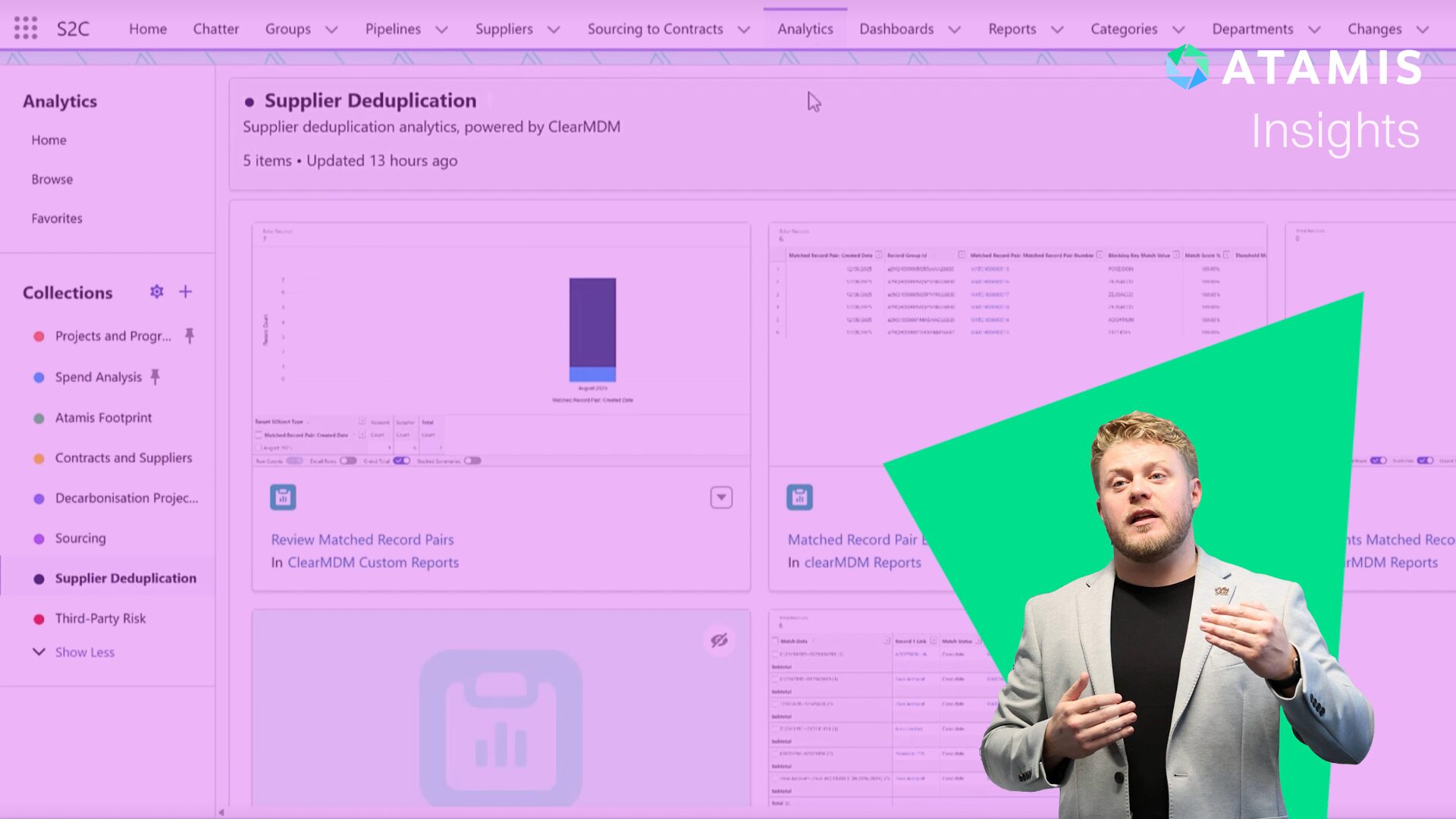
 Atamis’ end-to-end solution is built to target your specific pain points and drive efficiencies.
 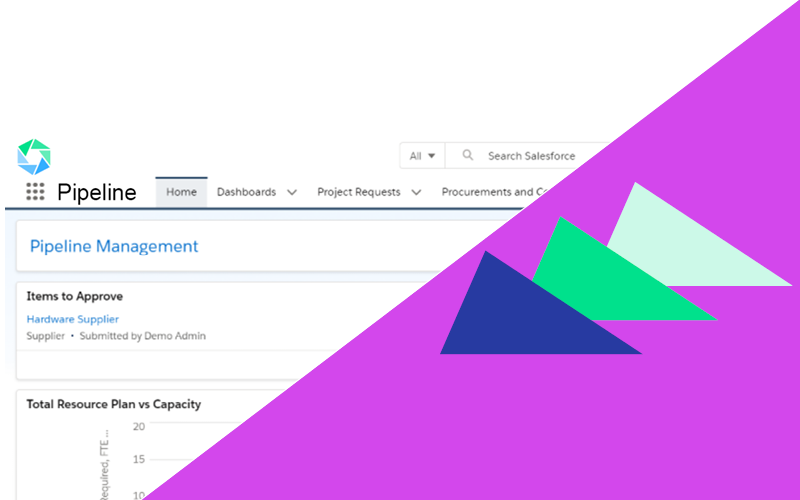 Our Pipeline App empowers your team to plan ahead and forecast for upcoming procurement activities.
 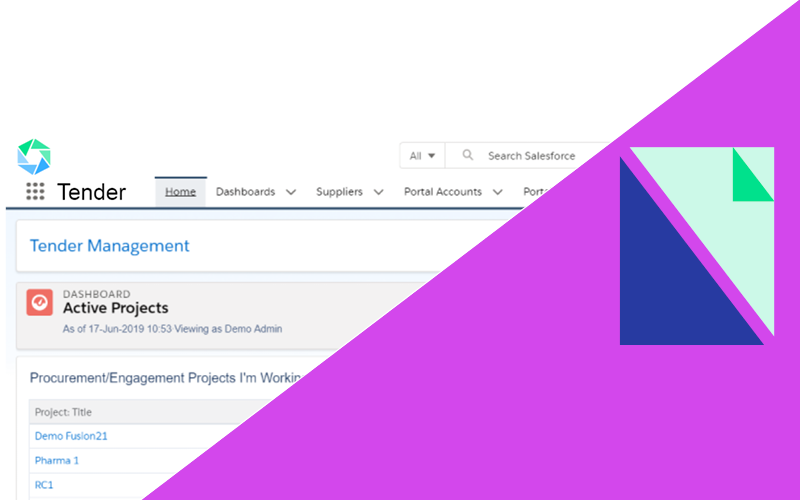 The Tender App allows your team to visualise all sourcing activities within your Atamis platform, from issuing tenders to receiving bids.
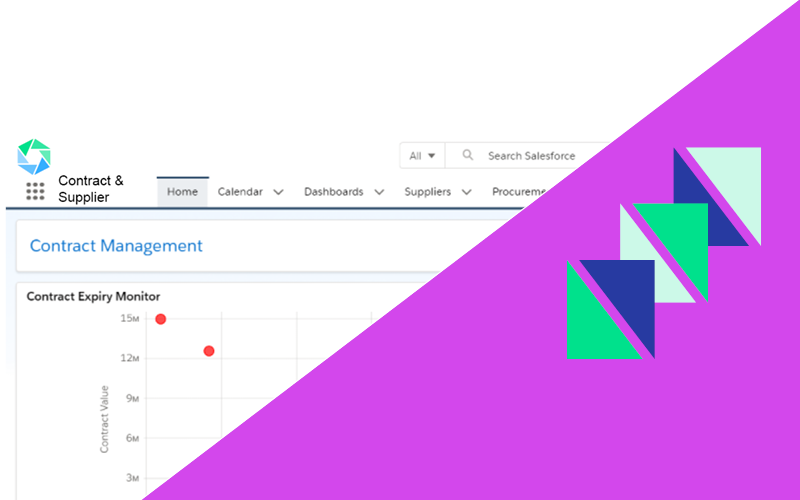 Our Contract & Supplier App puts your team in firm control of your key supplier relationships and provides a central repository for all contracts.
 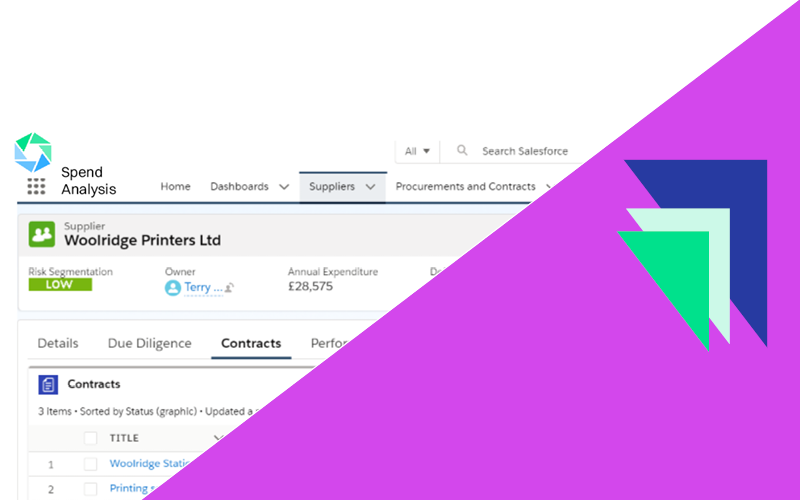 Our Enhancers ensure your solution is tailored to your needs. Pick and choose additional functionality that fits your requirements.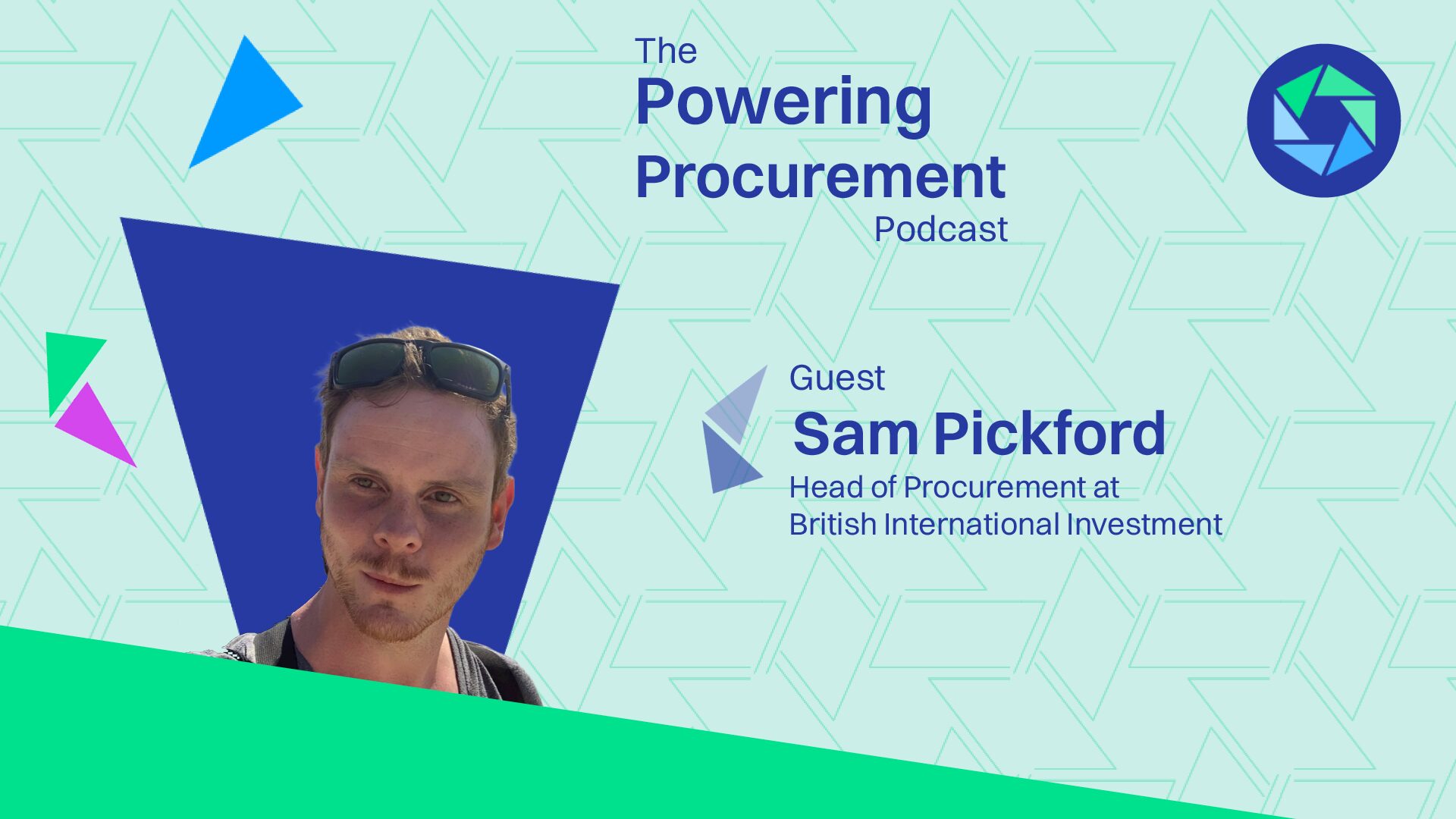
“If you understand the rules, regulations and the reasons for them; you can be fairly efficient within them”
In this episode of Powering Procurement, host Sian Lloyd is joined by Sam Pickford, Head of Procurement at British International Investment (BII), the UK’s development finance institution. With over 15 years of experience spanning transport, social care, finance, and international investment, Sam brings a rare blend of public sector depth and commercial edge.
From leading a £320 million rolling stock renewal for London Underground to building a procurement function that now supports investments across Africa and Asia, Sam’s career offers powerful lessons on resilience, risk, and purpose-driven procurement. Together, Sian and Sam explore: The unique challenges of procurement in emerging markets Balancing commercial priorities with social and development impact.
What Brexit, Covid and global supply shocks have taught us about resilience How AI and technology are reshaping procurement strategies Why saying “yes” to opportunities can unlock a truly diverse career Candid, insightful, and refreshingly pragmatic, this episode shines a light on the evolving role of procurement and why it’s a career path worth celebrating.
Find on Spotify
Find on Apple Podcasts
Watch on YouTube
Learn more


Ready to jump-start your procurement transformation?
Speak to our team about your tailored Atamis source-to-contract solution.
Get a Demo
Full episode transcript
Full episode transcript
If you think in those lenses it then kind of makes problem solving and procurement a bit easier and you're kind of looking not to kind of bypass rules but actually find the most efficient way of applying them and kind of managing through and I think that's helped in terms of kind of taking that through to my later career because it kind of sets out how you solve problems and kind of things which are often presented as big challenges you don't see in that way you see them as kind of something to navigate and get through. The Powering Procurement podcast is brought to you by Atamis, source to contract software designed to save you time and money. Hello and welcome to Powering Procurement, a podcast by Atamis where we unpack the world of procurement and supply chain management with the help of industry leaders.

I'm your host Sian Lloyd and this is our resident expert Gareth Birch. Hi after 20 years in procurement I may be billed as an expert but believe me I'm here to learn too. Each episode together with our expert guests we'll dive into specific challenges and opportunities facing the procurement industry today and we'll explore easy wins and longer-term strategies to help you rise to the challenge of driving value through your work while showcasing the power of procurement.

So let's get going. Hello and welcome to Powering Procurement, a podcast by Atamis. Today's guest has spent the past 15 years plus at the forefront of some of the UK's most complex and high value procurement projects.

Sam Pickford is Head of Procurement at British International Investment, the UK's development finance institution where he oversees all organisational spend and commercial lease negotiations. His career has been packed with strategic commercial experience from leading the £320 million rolling stock renewal programme for London Underground to delivering IT insourcing at the Pension Protection Fund and supporting social care and investment management procurement across local government. Sam's career shows a rare mix of public sector depth and commercial edge.

He brings a pragmatic, often refreshingly candid voice to the world of procurement, whether that's in negotiating with global rolling stock manufacturers or reshaping supplier ecosystems. It's been quite a journey and welcome to the podcast, Sam. Thank you, Sian.

Really looking forward to our conversation today and I know lots to talk about because you've got some great experiences to share, but we'll start at the beginning, looking back at transport, finance, local authorities, it's all there, part of your journey. What's kept you passionate about procurement over that period of time and through those different experiences? I think for me, the key thing has been the diversity and variety of the work I've been able to undertake and particularly the people I get to meet along that way. I've bought all aspects within those organisations and you get to meet a whole range of people and in my current role, because we are looking at investment across Africa and across Asia, you're connected with a whole range of different people and different experiences and different challenges and that diversity has really driven my passion through this.

That's really great to hear about your passion for procurement but also for people really strongly coming through there. In terms of your approach then to procurement strategy, obviously early days in public procurement, what would you say has shaped you? Has there been any pivotal moments along the way? I think particularly in my early days in local authorities, I was thrown in the deep end quite quickly. I was able to pick up a good variety of categories and expose to fairly high value procurement almost immediately on starting my first procurement role.

That being thrown in the deep end at the start really gives you that experience very quickly, gives you a lot of variety very quickly and you get a clearer sense of what you can do within procurement. I think also in those times, particularly early in doing more restricted public sector procurement, you learn the importance of good process and public procurement is often perceived as slightly bureaucratic but actually if you understand the rules, regulations and reasons for them, you can be fairly efficient within them but it's understanding where those come from and understanding they're not there for a reason, they're not there to restrict you, they're not there to make your job difficult. They're there to in most cases enable a fair and open procurement and if you think in those lenses, it then makes problem solving in procurement a bit easier and you're looking not to bypass rules but actually find the most efficient way of applying them and managing through.

I think that's helped in terms of taking that through to my later career because it sets out how you solve problems and things which are often presented as big challenges, you don't see them that way, you see them as something to navigate and get through. Understanding the why really leading to the how and the what, really interesting. Thanks Sam.

In terms of your current role then, tell us a bit about the institution. I have to say it's not really one that I was particularly aware of, of its work. Is it particularly public facing? Tell us a little bit about about the job and the work of the institution.

Yeah, so we are the UK Development Finance Institution. Most countries have a version of us, the Dutch have FMO, the Germans have DG, French have Proparco and we're essentially a UK FCDO owned and we focus on overseas international investment with a development lens. That development lens for us is about driving productive, sustainable and inclusive impact within our investments and it's quite interesting.

So we're there to make a return for the UK taxpayer but also to drive a development impact through that activity. We've existed for about 75 years. Up until a couple of years ago we were called CDC Group and better known through that lens and then in, I think it's 2022, we were rebranded as British International Investment.

We've undergone a lot of changes throughout our history. At times we've been smaller, very much funder of funds. These days we're a lot more broad in our investment approach.

I think we're very well known in the markets, perhaps less so in the UK. It's interesting. How does the procurement function sit within that? I joined in 2020 and I was brought in to essentially build out a procurement function because as an organisation we were undergoing a period of growth at that time.

So it's making sure you've got operational functions fit for the business we are trying to be and the strategy we're trying to deliver. So we are still somewhat embryonic, though perhaps more established than when I first joined, and we work with both our investment teams, our impact teams and operational business in whatever they're buying to kind of make sure they have coherent structures around what they do, manage risk and kind of deal with some of the challenges we face by undertaking procurements in the markets we deal. So it's a job which has taken me into the depths of say Nigerian tax law or kind of understanding the import around technology in Egypt and those type of things on fairly kind of small scale, but it's kind of often challenging environments.

So it sounds like some pretty unique supplier dynamics potentially. Yes and I think that's the attraction of it. It's kind of, it's taking you into markets kind of you wouldn't necessarily deal with, different maturity in terms of supplier markets in certain geographies, and you're trying to kind of make sure the outcomes are suitable for whatever local office or whatever we're trying to achieve, and they may be different than as set in London.

So for example when we've looked at kind of overseas offices in India or Nigeria before, you have to consider things like local geography, local transport, you need to understand the people, what the people working in those offices are dealing with and make sure kind of you're tailoring the process and buying to deliver their outcomes. So how do you balance then commercial cost saving priorities and social impact within that type of dynamic and setting? It's quite challenging but not impossible. I think the key with these things is often proportionality.

It's not to lower your standards but it's to set different ways of meeting those standards. It goes a lot to kind of how we used to kind of manage quality management systems and evaluation of those. So with a quality management system there's an ISO standard, ISO 9001, but not all organisations may be at the level of maturity to have that certification.

Potentially there's a level of investment they'd need to meet it and it may not be worth their while, but they are probably will have the systems and structures in place which are fairly normal in any business. So it's finding ways of kind of managing your assessment to kind of meet your market at its level of maturity and kind of you can hold the same level of standard but you're just expressing it in a different way and kind of manage to it that way. Yeah and the other aspect of buying within our markets is we're investing through a very specific lens, through a development lens.

So it's trying to make sure that our purchasing and our operational practises are aligned to that as well. So what that means for us is as a small procurement team we actually have access to some incredible resource internally. So when it comes to kind of topics such as gender and diversity and sustainability, we have you know a wealth of expertise within our internal teams who are focused on looking at investments through those lenses.

So we can pull on those resources and kind of help shape our procurement practises around them. And I know that purpose is also very much at a core purpose driven procurement. It's been a theme really throughout your career hasn't it? Tell us a little bit about that and how that's developed.

You know was it actually a deliberate choice? I think it's been more fortuitous and a bit of happenstance rather than deliberate choice. But it's something which gives me a lot of value for sure. In my current role I actually have a master's in international development and this is the first job I've ever done which is aligned to my educational background.

And again it wasn't by design really. But I think I've always enjoyed working in the quasi-public sector. I've enjoyed working on challenges around social care and other aspects and they add a value to your work and kind of give you a reason to kind of get up and commute and kind of make you more willing to kind of solve the problems because those problems are bigger than the procurement activity.

You know you're a small cog in a big machine trying to deliver something very important. And really particularly around social care you know the actual the end impact that it makes people's lives so important as well. And most probably in a sector like that it's interesting that most probably is always at the forefront of your mind in the work that you're doing even though you're not actually dealing directly with the people who ultimately will be benefiting.

Yeah and I think it's for me that really came to fruition in one of my very early procurements back in the local authority. We were looking at the outsource of the management of Gipsy and Traveller sites and trying to find someone to take on management of those sites and continue to deliver the provision even though we no longer had the statutory responsibility to do so. And that's the first procurement where we'd really got kind of community groups involved.

So we found community groups from the Gipsy and Traveller community and got them involved in the process to make sure that whatever we ended up with kind of was aligned to their needs. And I thought that was a really eye-opening experience for me because again it adds another lens and perspective to kind of the buying. And you're still kind of managing a commercial outcome but you're doing it whilst trying to deliver a lot of value beyond just commercial value within a project.

Yeah absolutely and talking about different experiences and particularly globally you know experiences that we've all faced recently over the past decade or so going back a bit more Brexit and then of course Covid. You know has that and those huge global scale events really influenced the way that you've managed supplier risk over the past decade? I think to a point I don't think they've changed anything particularly fundamentally but I think they've put a lens of pragmatism on particularly when dealing with SMEs and you are kind of looking beyond just metric-driven procurement when you're assessing risk. I think that that's become more critical.

I think it's something we would have to do inherently here because of the markets we deal with. So there isn't just the market data you'd use to assess risk in Europe isn't there to the same extent in say Africa. So we'd be doing that anyway so you have to look beyond just data.

But yeah I think that's the biggest thing. I think beyond that there's kind of commercial pressures particularly on supply chain particularly on technology has been a hugish outcome because of those challenges and that kind of slightly adds a futility to some things because whatever you do the cost is always increasing it seems at times and through no one specific fault it's just kind of the circumstance and challenges that the suppliers are dealing with. So yeah I think you have to kind of potentially kind of be more flexible in your approach to contracting so try and anticipate future changes within contracts so think about think at the earliest opportunity around kind of extensions variations and how you're going to manage those don't just assume they're not going to happen and kind of have a strategy and playbook around those type of aspects and then more broadly just kind of be generally quite pragmatic in your approach and kind of make sure you're kind of understanding the depth of whatever your supply chain is dealing with.

Some really great advice there thanks very much. One thing I do want to ask you about it was you know a really great headline I can certainly imagine a headline news story you know 320 million pound rolling stock renewal programme that you were responsible for during your time there with Transport for London. Love to hear a bit about that you know what it was like leading on that project from a commercial perspective you but also you tell us a bit about it and were there standout learnings for you following that project? Yeah it was a really interesting time and it was a huge team delivering the project not just on the commercial aspects but also in the engineering on the project management planners all sorts and it was really a kind of a programme level effort at the time what was really interesting and very enjoyable place to work with was it was a very diverse a very young team the head of engineering on the programme was very much focused on hiring on ability over necessarily experience which was really interesting and then we had a very dynamic team and I think we drew got a lot out more out of it than you'd perhaps expect it was also incredibly complex underground trains are kind of complex systems and very much you're kind of trying to engineer use 21st century engineering in a structure which was built in the late 19th century and your engineering you're building something away you wouldn't necessarily do if you're starting from scratch with things like that and a very specific environment that you can't change because the tunnels already there so it lends itself to kind of a lot of challenges on the engineering side on the commercial side it's a very interesting market rolling stock and global rolling stock it's not that big and it's not that broad so it was making sure we were driving value through that in commercial negotiations whilst kind of being conscious about kind of you've got to get the right thing on engineering and kind of the engineering assurance throughout is really important because it's a very kind of specific environment yeah I think it was the biggest learnings I took from it was kind of yeah I think I was more focused on teamwork coming out of it you've got to kind of bring everyone along on the commercial journey and I think that was a key one and finding ways of doing that was always interesting selling kind of commercial challenges to people who aren't looking at it through a commercial lens is very interesting but we took them on that journey yeah and it was a really fun team to work with and kind of I was very fortunate a couple years ago to go back and see the first train in passenger service with all the things we bought yeah I think yeah it was very interesting at the time well that must have been quite a moment going back and seeing that sort of first train there and sort of on this to another chapter isn't it really in the history of something which is virtually quite iconic in London yeah it was an interesting perspective because obviously I kind of did the buying and then left on to different things but so much of the engineering team stayed with it throughout and kind of it was nice to go back and be with old colleagues and see what they've achieved you know and had such a focus on delivery and it was I think there was 200 of us on Hainaut station on a cold November morning to see the train so yeah it was a lot of it's never glamorous though is it from that big project taking it forward it did that sort of change your approach to to leadership in any way I mean everything that we do we take learnings from it certainly don't we and but I'm interested just to know whether it sort of changed your approach to leadership at all it was interesting what you said about the dynamic of the team yeah I think there were a couple of things on reflection that it definitely changed I think I became more conscious that I can't control everything when you have so many things going on and you know it's you know it's such a large organisation and there's so many things going on with the board organisation even if you can align everything on your programme and project you know there may be other factors in the broader world which can impact it so I think it was interesting for me because it allowed me to kind of learn to let go of on certain things like not everything has to be perfect you know it's about kind of managing the whole and I think as well about it very much kind of forced you to long-term thinking you know it was five years after I left that the first train was into service and there was a hive of activity within that time so you've got to kind of think that far ahead in your horizons when you're think about the contract structures which will survive that length of time making sure that suppliers are in it as for the long journey as much as you are yeah and I think had to definitely kind of change my focus around that yeah and very much kind of became kind of more open to longer-term thinking and kind of you know have a further horizon when setting out and considering your activities that's really interesting and some of the things that we were talking about at the beginning was obviously that you've you've worked then in the public sector your role now at BII what would you say are some of the biggest differences perhaps between the sectors that you've been involved with between public and private sector you know is there anything particularly stand out there to share yeah I think there's there's a couple of things in our current role we're kind of are buying slightly on the shorter term with what we do and it's very much around kind of operationalising the business and keeping the business flowing when in the kind of local authorities particularly you're often working with a team whose kind of main job is to manage a large contract and for a long-term period and the commercial pressures are very different for us our commerciality is a lot more focused around investment whereas back in local authorities it's very much focused around kind of maximising what was often kind of a constrained budget and kind of trying to solve problems within that and I think that that's been the key behaviours it's like commerciality comes out in different ways and arguably some of the most commercial people I worked with worked in social care because they had to be the services weren't delivered if you weren't commercial because there's no way of kind of buying any fat within any service there so you have to learn how to be commercial you have to learn how to kind of extract value at all levels but also you have to learn how to work with your suppliers because the constraints aren't just on yourselves they're the suppliers and kind of their profitability and viability as a business so you've got to work in a very collaborative way whilst trying to kind of squeeze everything you absolutely can out of a contract often and I think that's the main difference and it's quite nice to kind of not always work in that environment because it's a very challenging environment and here we can be slightly more forward-looking and more strategic when we're making commercial decisions here we get to make them at a more strategic level and it's less on kind of a procurement like a procurement level where you're so it's kind of it makes life and interaction a little easier but yeah it's an interesting focus because you assume particularly in finance more broadly you know you assume and I think the narrative is often there's an inherent commerciality but you know and public sector's bureaucratic and slow where I think my experience is very different you know it's the commerciality is definitely there within finance and but it's equally there in the public space it's just having to manifest itself in different ways.

Yeah that's really interesting and most probably perhaps a perspective that most people don't really get so you know thanks very much for sharing that with us and so candidly as well really really interesting to hear. If we move on to perhaps some of the ways that tech can support now you know it's something that comes up quite often on the podcast e-procurement tools but how would you say that tech can be valuable or how has it been valuable in supporting and your team and with a strategic work as well? Yeah I think it's critical and particularly if you've got a relatively small team you've got to kind of deploy your resources in the most efficient way and data and technology allows you to do that. A lot of our focus here is very much kind of on our contractual estate and you know one of the first things we've done as a team here is to map that and to build bring in a system which allows us to manage that in a relatively efficient way.

In all cases I think data and the input is the absolute critical thing if your data's bad it's hard to build a strategy if your data's good you can build a very good commercial strategy around it so it's a problem I think especially when you're building a procurement team from scratch you've got to kind of see it as one of your first problems to solve and kind of find ways of doing that. What has also been quite interesting is obviously you know and it's very much in like the discourse at the moment is AI and kind of AI driven tools and I've been asked this question by suppliers a couple of times in terms of kind of you know can you tell if chapgpt has written a tender and you usually can because there's certain things which don't stick out we've kind of experimented looking at kind of tools around kind of assessing bits as well so the other side of it and I found the gap is kind of the nuance isn't there yet it's those tools are very good at kind of matching so that it can take words and kind of build gaps but it's selling it in kind of a way which is kind of you know you're looking for managing your risk managing you know basing your decisions on evidence and confidence and they're not focused on kind of building responses in those ways yet which is quite interesting but you know you can get a very nicely written piece and very well presented piece but it's the nuance and what really differentiates doesn't really come through yet so but it may in time so it's an interesting space to watch. Yeah and in terms of I guess watching that space and being in it you know are there any areas you know at the moment where you have seen opportunities through AI? I think so in terms of data organisation that's potentially the most interesting and kind of joining the dots between different systems and kind of building kind of those coherent risk profiles around your contractual estate your supplier estate I think that that's perhaps the easier opportunities to achieve at this stage and beyond that it's a bit wait and see I think.

I think you know that's a theme that often does come through and people embracing it organisations at different paces but obviously recognising it's very much here isn't it it's very much the now as well. In terms of any other I don't know standout moments or key learnings that you'd like to share with us Sam just at this stage I'll throw the floor open to you as we've got a few moments before I head to our final section which is the question we ask all our guests in terms of enjoying their career in procurement but is there anything else that you feel that you'd like to share on our Powering Procurement podcast? I think the key learning for me has always been to kind of be very open-minded in your career I think it's always been incredibly helpful and allowed me to have such diversity within my experience and kind of have a willingness to say yes to new opportunities even if you're not 100% sure what they may be and kind of what's in store. I think that's the key theme within my career today and it's definitely made it interesting and I've got to meet a lot of interesting people because of that.

Yeah and obviously your passion for it certainly shines through in your answers and the conversations throughout the podcast so it brings me to that stage where we ask the same question really to all our contributors which is connected to the reason why we have this podcast which is to shine a light on procurement as a profession as a career as an industry and particularly recognising you know like many others there's career retention recruitment issues so you know particularly if there are young people listening to it you mentioned you've been working with some very much younger teams but why are you happy that you have a career in procurement that you know perhaps reflecting on some of those key moments obviously you said it's been very much linking with people you've enjoyed as those opportunities that you've enjoyed and saying yes to things are so important which is great advice but why are you overall happy that you chose this? I think it's the variety of experience it's led me to has been kind of the key reason I didn't finish university thinking I'm going to start a career in procurement it wasn't really on my mind until I first applied for a procurement job it was I didn't really have a good sense of what procurement was first applied for my first procurement role so it's yeah I think I'm very happy I've had my career I'm very it's been a very interesting path I've really enjoyed the ability to travel with it and kind of see vendors see all types of different industries that you know I would have never necessarily thought would have been that interesting to me so I think that's been the most interesting thing it's you know I think most people because particularly because procurement's often set up around kind of category structures you know you're an IT buyer or you're a facilities or professional services buyer I've been very lucky in so much that I have never really been kind of constrained by what I'm buying I've been very much agnostic in that sense and I think if you can try and pursue a career around that I think it's great because you just get exposure to such a variety of things and variety of people you know and it's one of the few jobs which allows you to kind of dip in and out of different industries sectors teams even teams in a business you know it allows you exposure to so much and I think as I've got older as well I think one of the other things I've really enjoyed is you get to see under the skin of things and how things actually work how businesses run how they're profitable what things have to work for everything to pull together and very few jobs give you that kind of breadth of exposure. Yeah that's really fascinating and particularly you know what you've been talking about purpose as well throughout the whole podcast has certainly resonated with me and now of course you get the chance to use your master's as well. Yeah it's surprising only 15 years after I did it.

Yeah but it seems like yesterday. Yeah it's interesting we have a really good graduate programme here so it's very interesting to see kind of people in their early 20s kind of coming straight from university who've done similar masters to what I did similar and kind of it's really interesting to see the change and compared to how I was when I was at university and how they are coming in. They're all incredibly professional they're all incredibly focused in what they're looking to do and know a lot more than I seem to did when I was that age so yeah that's one of the other perks about working here is it's kind of you know we hire some really good and interesting people.

That's fantastic to hear and thank you so much for sharing your experiences with us but also very much your insight and the lessons I think that you've shared pretty candidly with us as well throughout the podcast. It's been great having you as a guest Sam and thanks so much for joining us. Our time has run out for the podcast but we've absolutely loved chatting with you and hope it's been a great experience for you as well.

Cool thank you Sian. And for everybody else don't forget to check out all our other podcasts and we'll be back with another one pretty soon. That wraps up this episode of Powering Procurement.

We hope you enjoyed that as much as we did. Visit our website at atamis.co.uk or follow us on LinkedIn to continue the conversation. Remember to subscribe on YouTube and follow us on Spotify, Apple Podcasts or wherever you choose to listen.

Thanks for joining us and see you next time on Powering Procurement.