 Atamis’ end-to-end solution is built to target your specific pain points and drive efficiencies.
 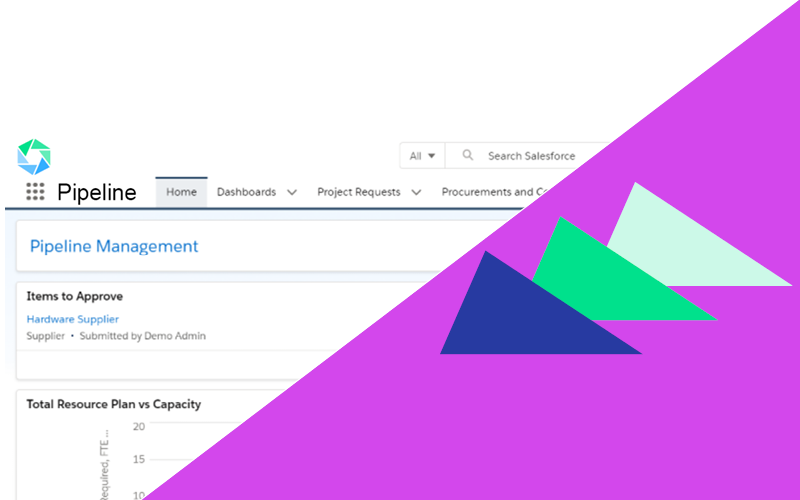 Our Pipeline App empowers your team to plan ahead and forecast for upcoming procurement activities.
 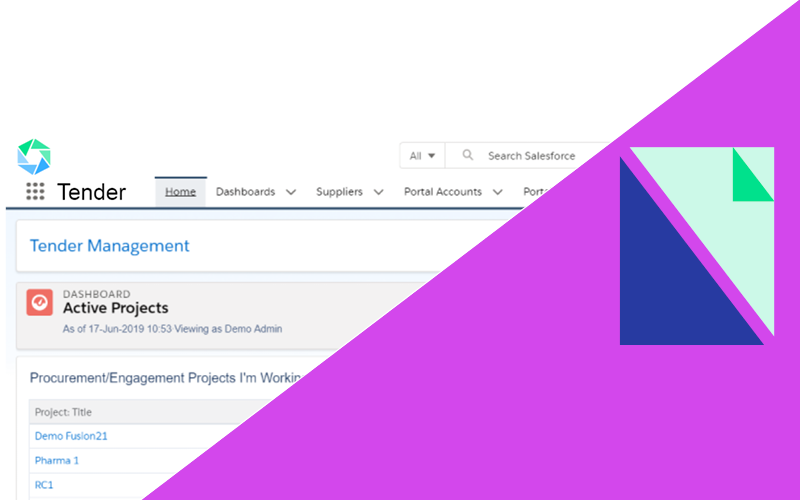 The Tender App allows your team to visualise all sourcing activities within your Atamis platform, from issuing tenders to receiving bids.
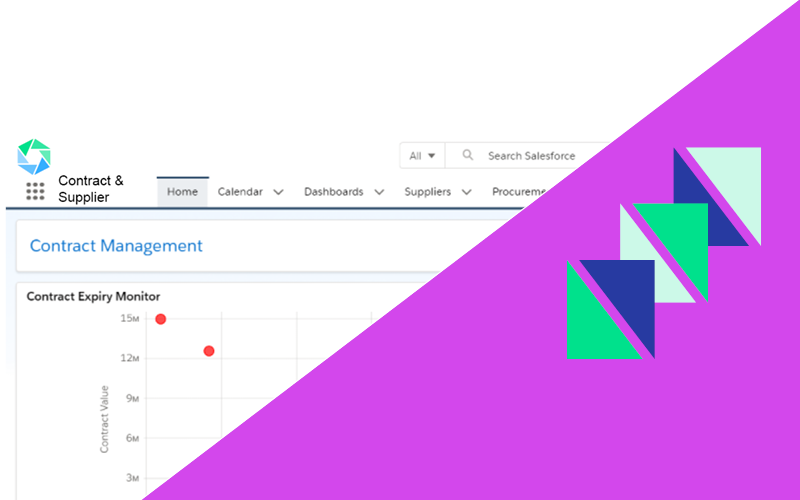 Our Contract & Supplier App puts your team in firm control of your key supplier relationships and provides a central repository for all contracts.
 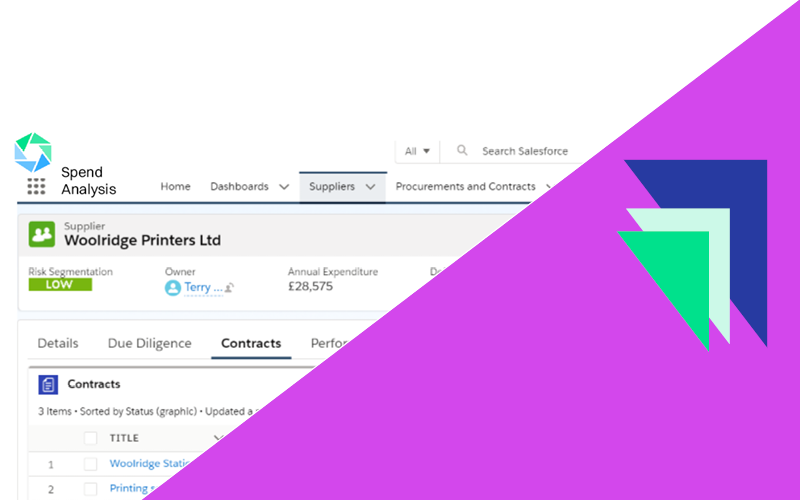 Our Enhancers ensure your solution is tailored to your needs. Pick and choose additional functionality that fits your requirements.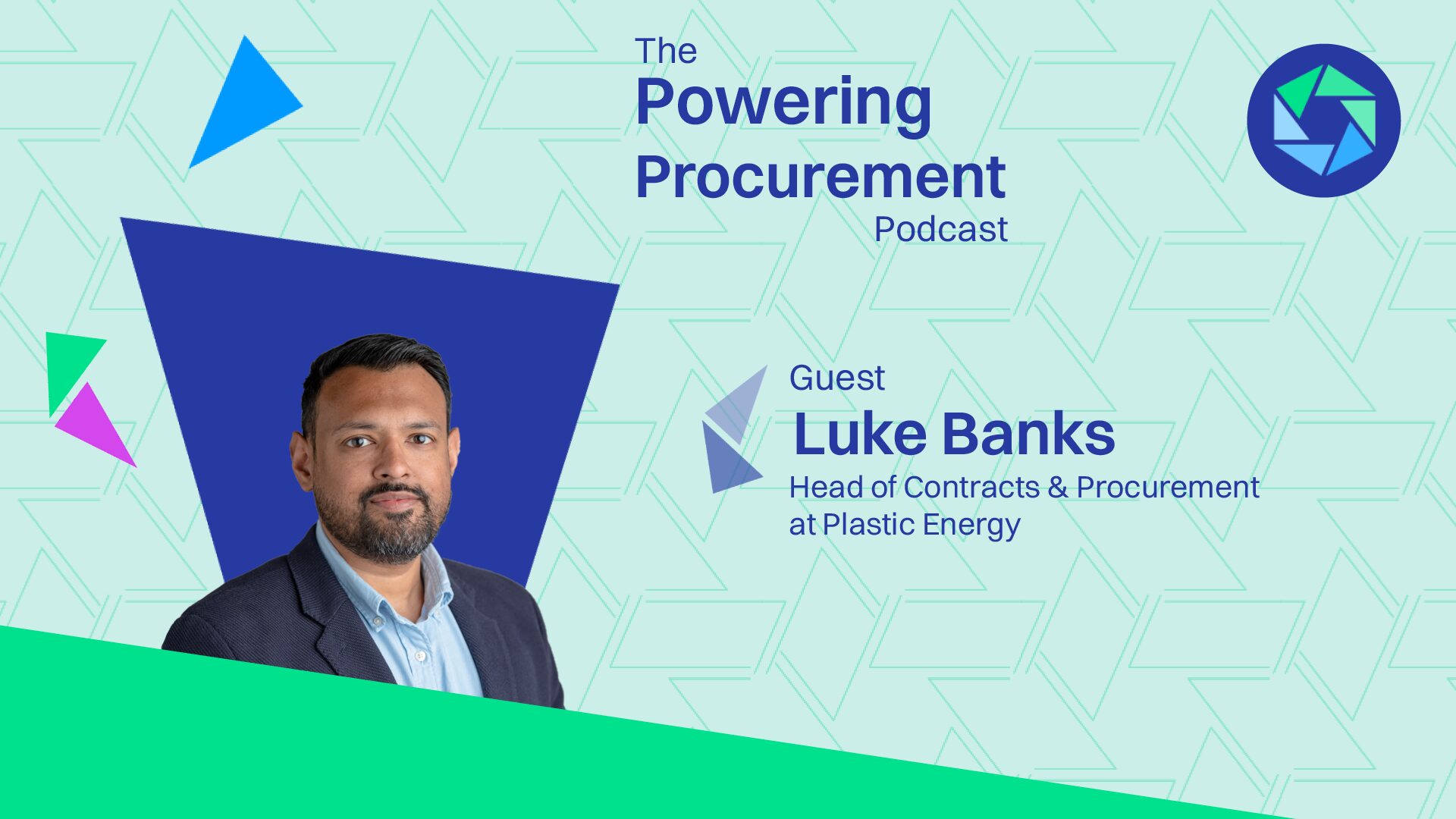
Key Takeaways
- Circular economy and procurement play a critical role in achieving sustainability goals.
- Understanding your supplier ecosystem is essential for long term impact.
- Procurement leaders must balance strategic transformation with operational delivery.
- Digital tools and AI are enabling procurement teams to focus on value creation.
- Strong communication and relationship management remain core procurement skills.
Series 2, Episode 6: Engineering to Impact – Luke Banks on Procurement and the Circular Economy
“It’s important to understand who your suppliers are working with because eventually, you’ll be part of that landscape as well”
In this episode of Powering Procurement, Luke Banks, Global Head of Contracts and Procurement at Plastic Energy, shares how circular economy and procurement intersect to support sustainable business transformation. Plastic Energy is helping tackle plastic waste by converting it into valuable resources that support a truly circular economy.
Luke explains how his career path from engineering into procurement was a deliberate move rather than an accidental one. His technical background, combined with commercial experience, has helped him develop a strategic approach to supplier relationships, negotiations and long term procurement decision making.
Throughout the discussion, Luke highlights how modern procurement teams are increasingly central to sustainability initiatives. Businesses such as Plastic Energy rely on procurement to embed responsible sourcing, supplier transparency and environmental accountability across their supply chains.
Platforms like Atamis help organisations gain the visibility and control needed to support these ambitions.
How Procurement Supports the Circular Economy
The shift toward sustainability has elevated the importance of procurement within organisations. Procurement leaders now play a key role in enabling circular economy strategies through supplier engagement, data insights and responsible sourcing frameworks.
For Luke, successful circular economy and procurement strategies begin with understanding the full supplier landscape.
Supplier Ecosystems and Long Term Impact
Procurement teams must look beyond immediate suppliers and understand the wider network that supports them.
This visibility helps organisations:
- Identify environmental and ethical risks
- Support suppliers aligned with sustainability goals
- Build more resilient supply chains
- Encourage innovation in sustainable materials and processes
Technology platforms such as Atamis enable procurement teams to map supplier relationships, monitor ESG performance and manage risk across complex supplier ecosystems.
Building Procurement Functions in Growing Organisations
Plastic Energy operates in a rapidly evolving sector where growth and innovation move quickly. Luke discusses the realities of building procurement capability within fast scaling organisations.
Procurement leaders must often balance strategic transformation with operational demands.
Balancing Strategy and Delivery
A successful procurement function must:
- Develop long term sourcing strategies
- Build strong supplier partnerships
- Support sustainability goals
- Deliver day to day operational procurement
This balancing act is where modern procurement platforms such as Atamis add value, providing structured processes and data visibility that help teams focus on strategic outcomes.
Digital Transformation and AI in Procurement
The conversation also explores the growing role of technology in procurement transformation.
Automation and AI are changing how procurement teams work by removing manual administrative tasks and enabling deeper insight into supplier performance and spend data.
When implemented effectively, digital tools allow procurement professionals to concentrate on higher value activities such as supplier collaboration, innovation and strategic planning.
Organisations increasingly rely on solutions like Atamis to support digital procurement transformation and unlock actionable procurement insights.
The Skills Modern Procurement Professionals Need
Luke also shares what he looks for when hiring procurement professionals and how the perception of procurement is evolving.
Technical knowledge and commercial awareness remain important, but communication skills are becoming equally essential.
Procurement professionals must be able to:
- Communicate strategy clearly across the organisation
- Build trust with suppliers and stakeholders
- Translate technical or commercial information into actionable insight
- Lead change as procurement becomes more strategic
These skills are especially important as circular economy and procurement strategies become central to organisational sustainability agendas.
Lessons from Horology and Craftsmanship
To close the episode, Luke discusses his passion for horology and how working in the mechanical watch industry shaped his perspective on supply chains and craftsmanship.
The watch industry emphasises precision, collaboration and quality across complex supplier networks. These same principles apply strongly to procurement leadership.
Understanding how every component and supplier contributes to the final product reinforces the importance of transparency and long-term supplier relationships.
It is a mindset that aligns closely with the principles behind circular economy and procurement, where collaboration and responsibility across the supply chain are essential.
Listen to the Episode
- Find on Spotify
- Find on Apple Podcasts
- Watch on YouTube
Frequently Asked Question
What is circular economy procurement?
Circular economy procurement focuses on sourcing goods and services that minimise waste, maximise reuse and support sustainable supply chains. It encourages organisations to prioritise suppliers and products that contribute to circular economic models.
How does procurement support the circular economy?
Procurement teams play a key role by selecting suppliers that align with sustainability goals, embedding ESG criteria into sourcing decisions and promoting materials reuse and lifecycle thinking.
Why is supplier visibility important in circular procurement?
Understanding supplier networks helps organisations identify environmental risks, ensure responsible sourcing and support suppliers who contribute to sustainable production models.
What role does technology play in circular economy procurement?
Digital procurement platforms like Atamis help organisations track supplier performance, monitor ESG metrics and gain insights that support circular economy strategies.
How can organisations start implementing circular economy procurement?
Organisations can begin by assessing supplier sustainability performance, introducing ESG criteria into sourcing processes and adopting procurement platforms such as Atamis that provide data visibility and supplier management tools.
Learn more




Speak to our team today.
Looking for procurement software that supports your team in achieving and tracking ESG metrics?
Get a Demo