
 Atamis’ end-to-end solution is built to target your specific pain points and drive efficiencies.
 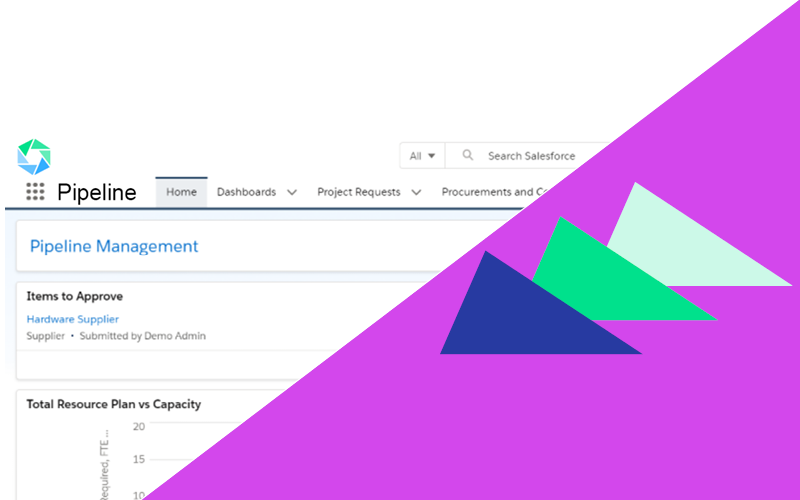 Our Pipeline App empowers your team to plan ahead and forecast for upcoming procurement activities.
 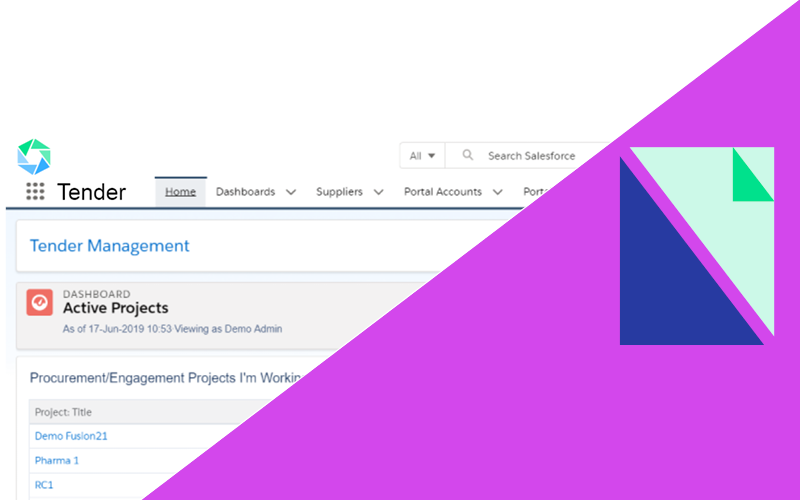 The Tender App allows your team to visualise all sourcing activities within your Atamis platform, from issuing tenders to receiving bids.
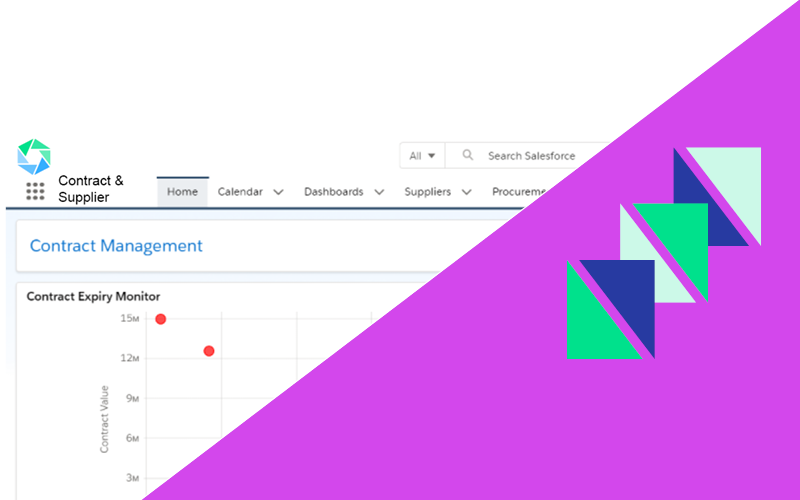 Our Contract & Supplier App puts your team in firm control of your key supplier relationships and provides a central repository for all contracts.
 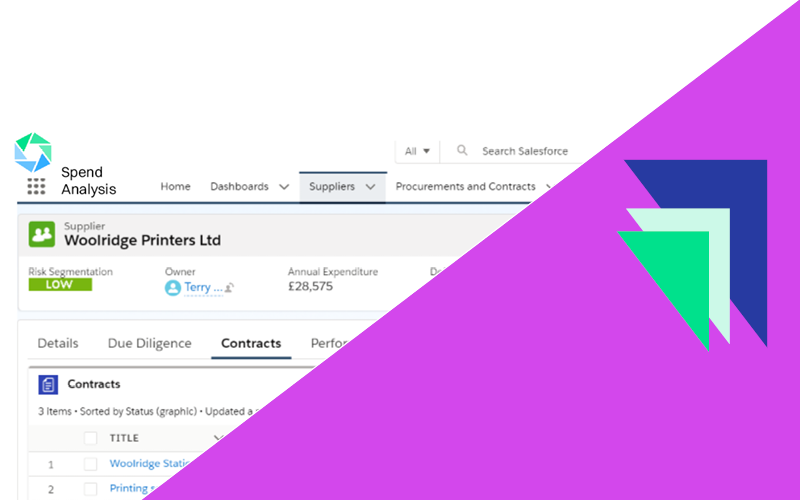 Our Enhancers ensure your solution is tailored to your needs. Pick and choose additional functionality that fits your requirements.

Risk has always been part of procurement.
What’s changed is how visible and how consequential that risk has become.
Across the UK, procurement teams are operating in an environment defined by scrutiny, uncertainty and rising expectations. Supply chains remain fragile. Regulatory requirements continue to evolve. Boards want assurance, not just savings. And procurement is increasingly expected to provide clarity in situations where information is often fragmented.
Against that backdrop, many organisations are discovering that their biggest exposure isn’t supplier risk alone, it’s process risk. Specifically, the lack of visibility between sourcing decisions, contract commitments and ongoing supplier relationships.
This is where source-to-contract (S2C) visibility is proving to be a quiet but powerful risk-reduction lever.
The visibility gap most procurement teams live with
On paper, many organisations appear well equipped.
They have:
- A sourcing tool for tenders
- A contract management system for storage
- A supplier database, often in spreadsheets
Yet in practice, critical information is scattered.
Procurement leaders often struggle to answer basic but important questions with confidence:
- Which contracts are up for renewal in the next six months?
- Which suppliers were awarded under what commercial assumptions?
- Where are we exposed if a key supplier fails or prices change?
- Which sourcing decisions are driving today’s contractual risk?
When sourcing, contracts and supplier data live in separate systems or worse, in inboxes, visibility is lost. And with it, the ability to manage risk proactively.
Why this matters more in the UK context
UK procurement teams face a unique combination of pressures.
In the public sector, transparency, auditability and regulatory compliance are non-negotiable. In the private sector, procurement is under increasing pressure to demonstrate commercial control, resilience and alignment with wider company objectives.
Across both, the common thread is accountability.
When something goes wrong, for example; a missed renewal, a non-compliant supplier, or a poorly governed award, procurement is expected to explain not just what happened, but why.
That’s difficult to do when visibility breaks down between stages of the procurement lifecycle.
Source-to-contract visibility: what it actually means
Source-to-contract visibility isn’t about dashboards for the sake of it. It’s about continuity of information.
At its simplest, it means that:
- Sourcing activity flows directly into contract creation
- Commercial terms agreed during sourcing are visible in the contract
- Contracts are clearly linked to suppliers and categories
- Supplier relationships are managed in the context of contractual commitments
In other words, decisions made early in the process don’t disappear once a contract is signed.
When supported by modern procurement software, this visibility allows procurement teams to trace risk from origin to outcome.
The risks that hide between sourcing and contracts
Many of the most common procurement risks don’t sit neatly in one system.
They sit in the handover.
1. Award decisions lose context
When sourcing outcomes aren’t properly connected to contract management, the rationale behind decisions is lost. Over time, this weakens governance and makes challenges harder to defend.
2. Contractual obligations aren’t actively managed
Without visibility into milestones, obligations and renewals, contracts become passive documents rather than active controls.
3. Supplier performance is assessed in isolation
Supplier relationship management often happens without reference to the commercial commitments that underpin it, reducing its effectiveness.
4. Risk becomes reactive
Issues are spotted late, when options are limited and pressure is high.
Better source-to-contract visibility addresses these issues by keeping information connected throughout the lifecycle.
How UK teams are using S2C visibility to reduce risk
Procurement teams that have invested in integrated S2C approaches are seeing tangible benefits not because they’re working harder, but because they’re working with better information.
Earlier engagement, fewer surprises
When procurement has visibility of upcoming demand and sourcing pipelines, teams can engage earlier, plan workloads and reduce rushed decisions that introduce risk.
Stronger contract control
Linking sourcing data directly into contract management means fewer discrepancies, clearer obligations and better compliance with agreed terms.
More confident supplier management
With suppliers viewed through a single lens, sourcing history, contracts, performance and risk, supplier relationship management (SRM) becomes more structured and meaningful.
Clearer audit trails
For regulated and public sector organisations, being able to demonstrate how decisions were made and how they’ve been managed since, significantly reduces governance risk.
The role of procurement software in enabling visibility
It’s technically possible to achieve some of this with spreadsheets and manual processes. But it doesn’t scale and it doesn’t hold up under scrutiny.
Modern procurement software UK teams are adopting focuses on:
- A single source of truth for sourcing, contracts and suppliers
- Structured data rather than static documents
- Configurable workflows aligned to governance requirements
- Visibility by design, not by reporting workaround
Crucially, the most effective platforms don’t force procurement teams into rigid processes. They support how procurement actually operates across categories, sectors and levels of maturity.
Why contract management alone isn’t enough
Many organisations try to solve visibility issues by investing in contract management software alone.
While that helps, it only addresses part of the problem.
Contracts don’t exist in isolation. They’re the output of sourcing decisions and the foundation of supplier relationships.
Without visibility into:
- how suppliers were selected
- what assumptions were made
- what alternatives were considered
Contract management becomes reactive rather than preventative.
This is why source-to-contract matters.
Reducing risk without adding complexity
One concern procurement leaders often raise is complexity.
More systems, more data, more dashboards, all of it can feel like additional risk rather than a solution.
The most effective S2C approaches avoid this by:
- Reducing duplication
- Automating handovers
- Embedding governance into workflows
- Providing role-specific visibility
The result is not more admin, but less. Not more control for its own sake, but better control where it matters.
A shift in how procurement is perceived
Perhaps the most significant impact of improved source-to-contract visibility isn’t operational, it’s reputational.
When procurement can:
- Clearly explain decisions
- Anticipate issues rather than react to them
- Demonstrate control across the lifecycle
It changes how the function is viewed internally.
Procurement moves from being seen as a gatekeeper or a back-office function to a trusted commercial advisor, one that reduces risk while enabling progress.
Final thoughts: visibility as a form of resilience
Risk in procurement can’t be eliminated. But it can be understood, managed and mitigated.
For UK procurement teams navigating regulatory pressure, supply uncertainty and rising expectations, source-to-contract visibility is becoming a cornerstone of resilience.
Not because it’s fashionable.
But because connected information leads to better decisions and better decisions reduce risk.
As more organisations reassess their procurement technology landscape, the question is shifting from “Do we need source-to-contract?” to “How much risk are we carrying because we don’t have it?”
Looking for your new software partner?
Speak to our team today about a software solution tailored to your needs.
Get a Demo

Hayley is a Product Owner at Atamis, where she works at the intersection of procurement, technology and product development to shape solutions that address the evolving needs of modern procurement teams. She translates user and business requirements into clear product priorities, working closely with customers, procurement specialists, developers and other stakeholders to ensure Atamis’ procurement technology delivers practical, scalable and effective outcomes across the source-to-contract lifecycle.
Her expertise spans procurement technology, product ownership, digital procurement transformation, requirements analysis and the design of technology-enabled procurement processes. Through her work at Atamis, Hayley brings a practical understanding of how procurement software can improve efficiency, governance, visibility and user experience.