-
Platform
- Source-to-contract
 Atamis’ end-to-end solution is built to target your specific pain points and drive efficiencies.
 - Pipeline App
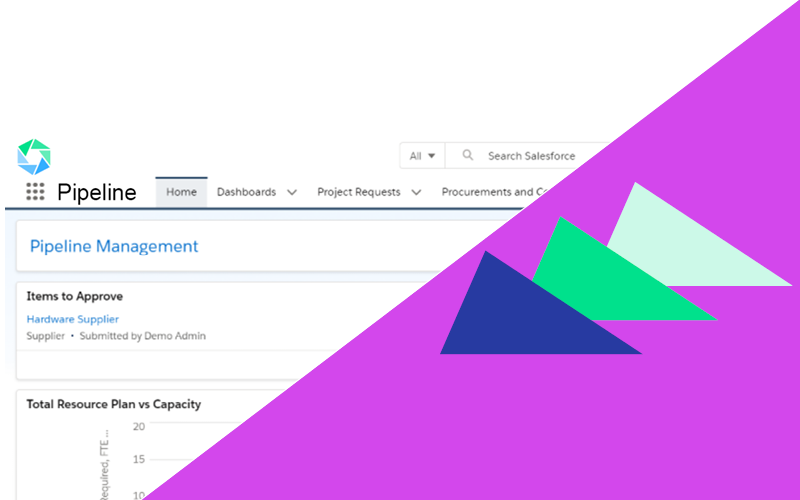 Our Pipeline App empowers your team to plan ahead and forecast for upcoming procurement activities.
 - Tender App
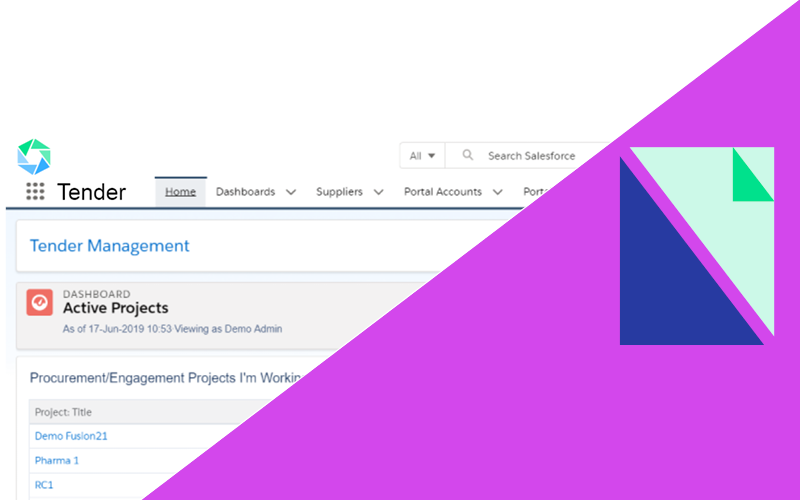 The Tender App allows your team to visualise all sourcing activities within your Atamis platform, from issuing tenders to receiving bids.
 - Contract & Supplier App
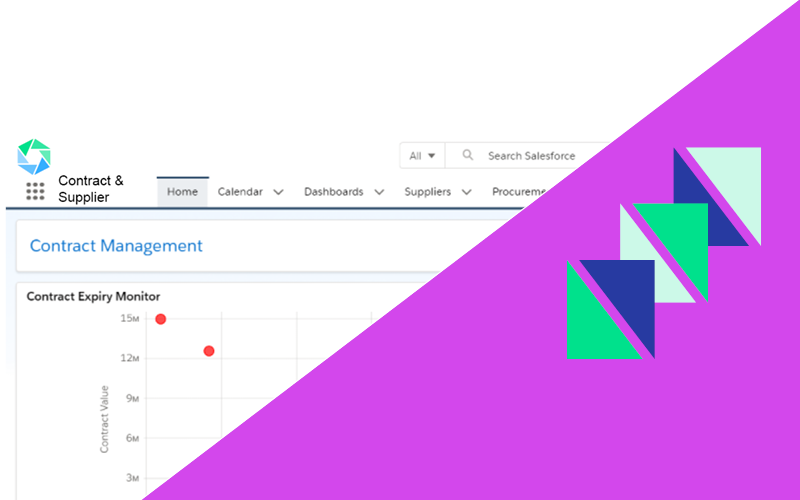 Our Contract & Supplier App puts your team in firm control of your key supplier relationships and provides a central repository for all contracts.
 - Enhancers
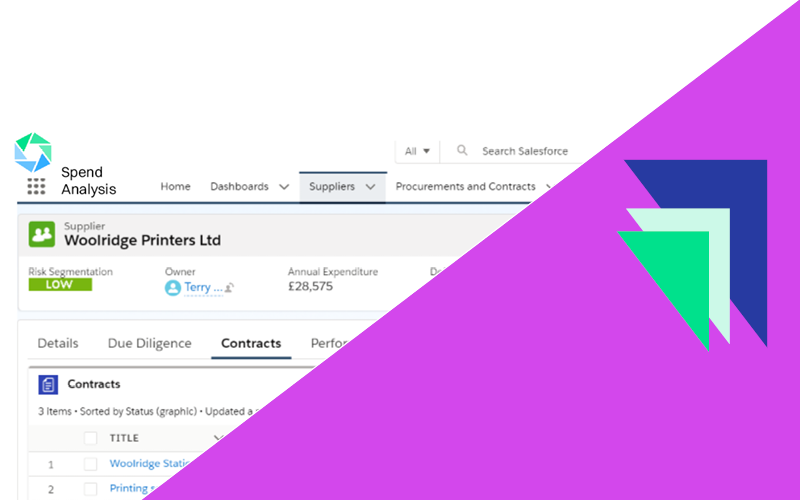 Our Enhancers ensure your solution is tailored to your needs. Pick and choose additional functionality that fits your requirements.
- Source-to-contract
Long-term Vision Communication – July
Welcome to Atamis’ July Long-Term Vision Communication. These updates are designed to sit between releases and to keep our clients in the loop on key progress. In this update you should gain a better understanding of what we’re working on and where our focus is long-term.

Spotlight: How Atamis Approaches Risk Management
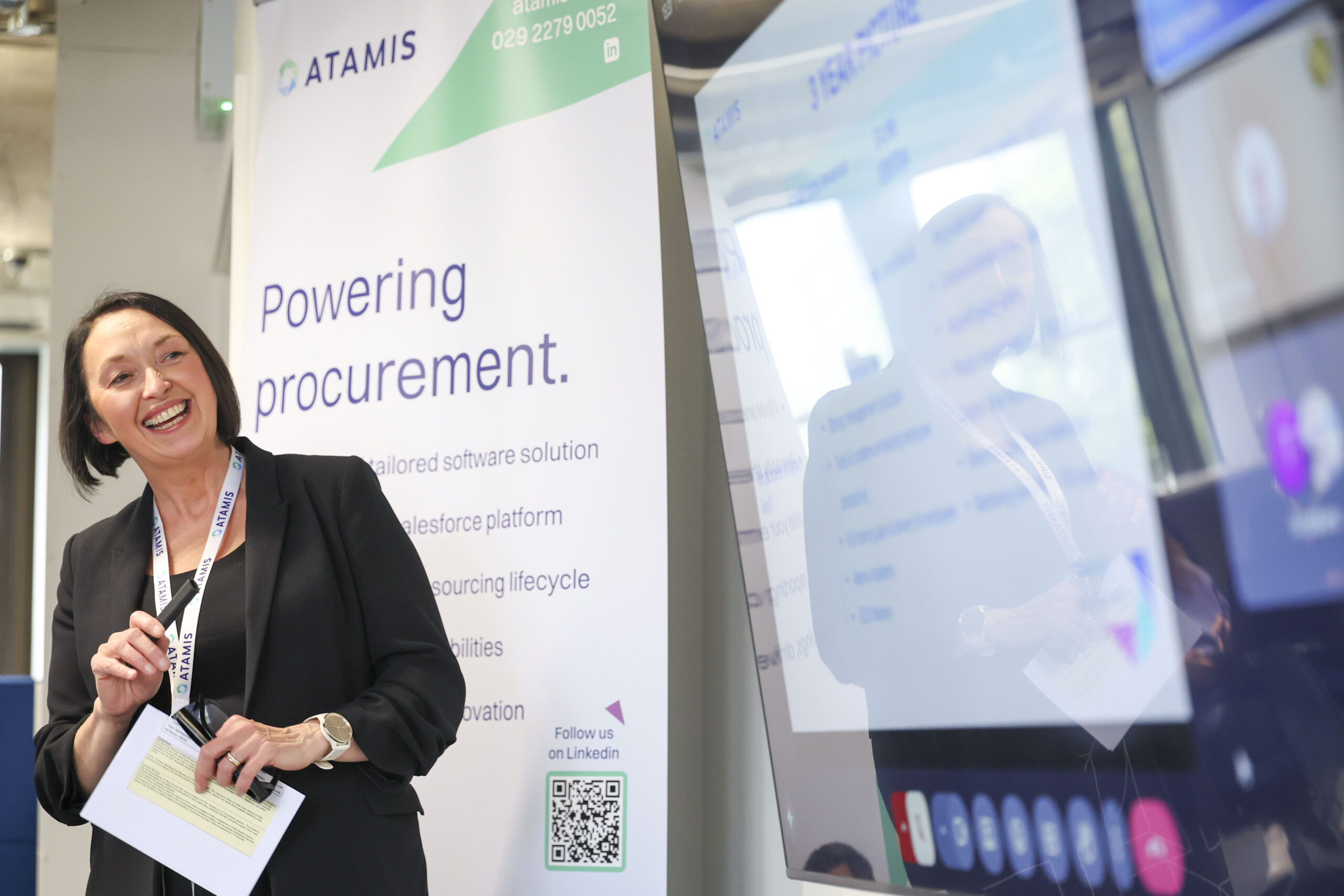
How Procurement Technology Helps Identify and Manage Supplier Risk by Sally Harris
How Procurement Technology Helps Identify and Manage Supplier Risk by Sally Harris
Supplier risk continues to be a hot topic for procurement teams, and the stakes involved when it comes to supplier failure are high. Production can stop overnight if a supplier goes into liquidation, reports of ‘greenwashing’ in the press can massively damage a brand’s reputation, and then there are the financial penalties and threat of legal action for breaching sanctions or regulations.
So, how can procurement technology help manage supplier risk?
By bringing supplier data, external risk intelligence, assessments, workflows and risk management processes together in one place, procurement technology can help organisations move away from static, periodic supplier reviews towards more continuous supplier risk monitoring.
Yet many organisations are still relying on annual assessments and manual processes, or using multiple siloed systems that can’t give them a complete view of where their risk exposure lies across the supply chain. Supplier risk is external and moves quickly, but procurement teams are often using systems and processes that are internal-facing and based on static data. For the end user, those processes can also be admin-heavy and inefficient.
Technology can help procurement teams identify emerging risks earlier, standardise risk management processes, automate routine activities and give stakeholders better visibility of supplier risk across the organisation. However, technology alone isn’t enough. The right foundations need to be in place first.
The Building Blocks of Effective Supplier Risk Management
A lot of the technology and tools used to manage supplier risk aren’t new. Online supplier assessments have been around for a while, as have APIs that use external feeds to pull data into procurement systems. Automated workflows can help with things like scheduling, reacting to triggers and alerting relevant stakeholders.
But the technology needs some other building blocks to be in place before it will enable you to proactively and continuously manage supplier risk efficiently.
Supplier segmentation
Risk management processes can’t be one-size-fits-all. Whether you use the Kraljic matrix or a simple tiering system, segmenting your suppliers is the first step in being able to apply proportionate risk controls.
A critical strategic supplier may require a very different level of monitoring and assurance from a low-risk supplier providing a non-critical product or service. Segmenting suppliers allows procurement teams to focus risk management efforts where the exposure is greatest.
Trusted supplier data
Structured supplier master data, with key identifiers such as Companies House or D&B number, details of parent/child relationships, registered address and operating locations – and no duplicates! – makes matching external data feeds to the right supplier record much easier.
And it’s not just supplier data. If you want to understand your risk exposure, you need a reliable contract database, with contracts linked to the right supplier records and key information such as category and renewal date, alongside spend data from your ERP. This information needs to be captured as structured, reportable data so that procurement teams can analyse risk across the organisation.
Without trusted, connected data, it is difficult to build a complete picture of supplier risk or understand the potential impact of a supplier issue.
Clear ownership
This is perhaps the hardest one to achieve because it’s not about the technology.
You need clear supplier ownership, with someone responsible for reviewing and actioning risk alerts. Buy-in from commercial managers and strong supplier relationships are critical to the success of any supplier risk management process.
Technology can identify and surface a potential risk, but there still needs to be someone accountable for deciding what happens next.
A robust governance framework
A clear governance framework is essential for any form of automation. Processes need to exist that define what risk means to your organisation, alongside your scoring models, thresholds for escalation and appropriate mitigation actions.
Without this framework, it is difficult to ensure that risk alerts lead to consistent and proportionate action.
Where Procurement Technology Comes In
Once you’ve got those fundamentals in place, that’s where procurement technology can help.
Atamis can support API integrations with external data feeds, pulling financial health scores, ESG ratings, sanctions and watchlists, negative news alerts and more directly into supplier records. This helps shift supplier risk monitoring towards a more continuous model, rather than relying solely on periodic reviews.
Automated workflows allow procurement teams to set triggers based on defined thresholds and alert relevant supplier managers when action is required. This means teams can spend less time manually checking data and more time responding to risks that genuinely require their attention.
Supplier assessments and supplier assurance
Atamis’ Supplier Assurance Enhancer allows you to send custom assessments to suppliers, with dynamic question sets that can be issued automatically on a regular frequency or triggered by a specific risk event.
Suppliers can submit their responses electronically, allowing them to be automatically scored. This makes it quicker and easier for procurement teams to identify areas of potential risk that need further attention.
The result is a more consistent approach to supplier assurance, with less manual administration for both procurement teams and suppliers.
A complete audit trail and risk visibility
Technology can also help organisations create a clearer audit trail of supplier risk management activity.
Atamis enables supplier assessment results and risk information to be captured against individual supplier records. Individual scorecards can then be rolled up into dashboards, giving procurement teams and senior stakeholders a broader view of supplier risk across categories, business units, markets or the supply chain as a whole.
This helps organisations move beyond individual supplier assessments to understand their overall risk exposure.
Managing supplier risks and issues
With the Risks & Issues Enhancer, procurement teams can create risks directly against a supplier record, generate inherent and residual risk scores, capture mitigating actions and see the risk through to conclusion.
Ownership of the risk and action plan can also be shared with the supplier through the discussion board and Supplier Portal. This keeps information, actions and communications together in one system, rather than relying on separate spreadsheets, emails or disconnected tools.
What Does This Mean in Practice?
API integrations, automated workflows and online assessments can enable a significant shift towards continuous supplier risk intelligence.
For procurement teams, the potential business benefits include:
- Earlier detection of supplier instability – giving teams more time to work with the supplier, put mitigation plans in place or go out to market.
- Stronger supply chain resilience – helping organisations understand concentration risk and respond faster when disruption occurs.
- Improved regulatory and compliance oversight – reducing the risk of legal action, fines or reputational damage associated with sanctions, ESG issues and other regulatory requirements.
- Better visibility for senior leadership – providing greater confidence that supplier risk is being actively monitored and managed across the organisation.
- More efficient procurement processes – reducing manual administration and giving buyers more time to focus on value-adding activity and supplier relationships.
- More consistent supplier assurance – creating standardised processes for assessing and monitoring suppliers while allowing risk controls to be proportionate to the level of exposure.
- A stronger audit trail – providing a clearer record of assessments, risk decisions, mitigating actions and outcomes.
The Future of Supplier Risk Technology
Supplier risk continues to increase in complexity, and situations can move incredibly quickly. The next stage of supplier risk technology is likely to be about making sense of the growing volume of data available to procurement teams.
AI tools could, for example, help identify patterns across internal supplier data and external risk feeds, highlight unusual changes in a supplier’s risk profile, summarise emerging issues or prioritise which risks need human attention first.
Used alongside a procurement platform like Atamis, AI could help procurement teams move from simply receiving more information to getting more meaningful insight from it. The goal isn’t to replace procurement judgement or supplier relationships, but to give teams better intelligence to support faster, more informed decisions.
The organisations that succeed will be those that move from static, periodic reviews to continuous, technology-driven risk intelligence, powered by APIs, external data feeds, dynamic assessments, automated workflows and, increasingly, AI-supported analysis.
Ready to Take a More Proactive Approach to Supplier Risk?
Atamis brings supplier data, supplier assurance, risk management, workflows and reporting together to help procurement teams gain greater visibility of supplier risk and take action when it matters.
Request a demo to see how Atamis can help your organisation move towards a more proactive and connected approach to supplier risk management.
Risk and Issues Improvements
Risk and Issues Improvements
To ensure our platform remains inherently adaptive to an increasingly complex compliance landscape, we are actively exploring how we can further evolve our risk and issues capabilities. Our current conceptual focus centres on the design of a unified risk model; one capable of flexibly accommodating emerging regulatory frameworks, such as the structural transparency demands of the UK Procurement Act 2023 (PA23) and the operational resilience principles of the EU’s DORA, without introducing unnecessary platform complexity. We are investigating ways to broaden risk categorisation and provide clearer visibility into how specific mitigations lower threat levels, aiming to give your teams the trustworthy, explainable data needed for robust auditing.
Crucially, these exploratory avenues are guided by a philosophy of minimising operational friction. We are assessing how future developments can keep risk evaluation deeply embedded within the day-to-day procurement lifecycle, from supplier onboarding through to contract approvals, rather than isolating it in a standalone module. By researching lightweight platform automation to support continuous monitoring and trigger-based reassessments, we are seeking inventive, low-friction methods to keep your organisation proactive and compliant, all while maintaining a seamless user experience.
Conflict of Interest
Conflict of Interest
One area we are scoping to tackle these Risk challenges is how Conflicts of Interest are leveraged within our product. In its current form Conflicts are relatively binary with only a singe field to provide details to what could potentially impact a procurement, reducing the depth of the data available which would otherwise be used to inform decisions on risk management and mitigations.
Providing this data means exploring how we can approach Conflict declarations at a more granular level – providing different layers that complement the stages of the procurement cycle that your teams are in; procurement/project category conflicts occurring at high level/concept stages, and specific supplier conflicts within the Tender stage. Accompanied by dedicated mitigations fields, this granular approach provides a rich data set of records which provide risk oversight of declared and potential Conflicts that could otherwise hold up key procurement projects, pipeline records, or contracts.
To support our product discovery process and ensure that we are building solutions for Conflict of Interest functionality that work for all our clients, we have created a dedicated Topic, #Conflict Of Interest, on Atamis Communities. Ideas can be tagged with this Topic as part of submission which allows us to keep informed of features that are important to you. The Ideas list can also be filtered based on Topics so you can see what others have submitted and back that idea with your votes and comments.
Risk Based Integrations
Risk Based Integrations
To help you make more informed decisions, we are exploring ways to bring valuable external data directly into your daily procurement workflows through strategic third-party integrations. As part of this research, we are looking at how we might collaborate with LexisNexis to offer simpler, more direct access to legal and regulatory compliance information. By investigating this connection, our aim is to let your teams quickly check key supplier credentials without having to leave the platform, helping you manage compliance more efficiently.
In parallel, we are evaluating the possibility of integrating with Moody’s supplier risk data to provide clearer visibility into financial stability and overall supplier health. We want to see how these insights could be built naturally into your existing processes, giving you a more complete view of potential supplier vulnerabilities.
While these integrations are still in the early stages of exploration, our goal is to design supportive tools that help you protect your supply chain and simplify your risk reviews.
Atamis NPS 2026 is now open!
Our 2026 NPS survey is now open. We’d love to get your feedback on your experience with Atamis. The NPS helps us understand what’s working and where we could improve.

We wanted to share a quick update on some exciting changes we’re making to the Atamis support desk. Our goal is always to get you the answers you need as quickly as possible, so we’ve been investing in both our team and our technology to make that happen.
Here is a quick look at what is changing and how it will speed up your support:
A Bigger, Faster Support Team
We have expanded our core support desk to include dedicated second-line agents. In the past, our front-line team had to rely on the wider business to resolve escalated issues. Now, those experts are sitting right on the support desk. This means complex tickets will be resolved much faster. Even better, this second-line team will now handle basic system changes (anything taking under an hour), which means a significantly faster turnaround for your minor technical requests.
Now Live: Faster Phone Support for Your Suppliers
To free up our human agents for your complex queries, we’ve just launched an AI voice agent to manage inbound phone calls from your suppliers.
The AI can answer routine supplier questions immediately, meaning zero wait time in a queue for them. It also automatically logs the call details, so our records are always perfectly accurate. If a supplier has a complex issue, the AI seamlessly transfers them straight to a human agent.
Coming Soon: Instant Answers for Support Tickets
Over the next few months, we will also be rolling out a new AI assistant for our email and web-form tickets, designed to speed up your resolution times even further:
- Instant Action: When you submit a ticket, the AI will analyse it. If it’s a routine request, it will attempt to provide a solution.
- Seamless Handovers: If it needs human expertise, the AI will immediately route the ticket, along with a full summary, to the right specialist.
- Humans First: Our experienced support team remains the backbone of Atamis. The AI is simply here to clear out routine queries instantly, so our experts are free when you really need them.
A Quick Word on Data Security
We know how critical your commercial and operational data is. Please rest assured that all of our new technology, including these AI tools, operates strictly within our existing, rigorous security, privacy, and data protection frameworks.
We’re confident these changes are going to deliver a faster, more effective support service for you and your team. If you have any questions at all about these updates, please don’t hesitate to reach out to your Client Success Manager or Operations Manager.
We’ve rounded up the most popular ideas submitted via Communities in the last 6 months. You can find more information on key ideas below!
Broadcast Messaging Functionality – 19 Votes
The most popular idea by vote count, this idea sits as part of a trend we can see with clients raising and voting on ideas related to messaging functionality within our product offering. Specifically, this idea highlights a requirement to be able to bulk-message all suppliers that have a supplier portal linked to the Buyer’s environment, enabling users to deliver updates and more holistic communications to suppliers.
Back Button Improvements – 14 Votes
As the second most popular idea, this one is very broad and was the result of amalgamating a series of older “Atamis Ideas” tickets whilst migrating to the new Atamis Communities platform.
This idea aligns with a trend of submissions and votes we have seen which focus on improving User Experience through UI elements. To achieve this and complete the idea we are modernising our UI in stages, keeping UX as a focus whilst we build and improve features. Part of this effort means we are not just asking where ‘Back’ buttons themselves can be improved, but also re-evaluating the natural flow of actions within our product and seeing where we can build more modern in-screen or modal call-to-actions, reducing click heavy processes to create a more engaging UX.
Improve Clarification Message Visibility – 13 Votes
Another idea that was collated from older idea submissions and added to the new Atamis Communities platform, this centres around the clarity and usability of the clarification messages.
Feedback has been that these are difficult to navigate and not very intuitive by design, resulting in clunky processes that take additional time and impact on productivity.
Meet Atamis’ New Solutions Consultants

Sally Harris
I’ve worked in Procurement for my entire career, until now! I started out in financial services, with Royal Bank of Scotland, Direct Line Group and then Aviva, in various different procurement systems roles, from my early days in reporting through to system owner. Most recently, I’ve been Systems Lead with the Department of Health and Social Care, managing the Atamis contract there, leading on the change processes, and having the opportunity to chair the Atamis Government Innovation Network for central government clients.
I’m really excited to be joining Atamis as a Solution Consultant. I’ve used the system as a client for the last couple of years, I have firsthand experience of what the benefits are and how it can help organisations unlock value, and I’m looking forward to using this perspective to help clients get the best solution for their needs.

Roy Sourabh
I’m excited to have recently joined Atamis as a Solutions Consultant and to be working with our clients as they get the most value from their procurement and commercial solutions.
Over the past 14 years, I’ve worked in solution consulting, pre-sales, technical consulting, and customer enablement across a range of SaaS and technology organisations. My experience has centred on understanding customers’ challenges, designing tailored solutions, delivering engaging product demonstrations, and helping organisations adopt technology that delivers real business value.
What I’ve always enjoyed most is building strong relationships with customers, understanding what success looks like for them, and working collaboratively to solve complex business problems. Joining Atamis is an exciting opportunity to be part of a team that’s passionate about innovation and customer success, and I’m looking forward to partnering with our clients to help them achieve their goals.
Outside of work, I enjoy public speaking, travelling, playing cricket, and spending time outdoors. I’m also always keen to meet new people and learn from different experiences.
We hope you found this communication helpful
We’d love to know what you’d like to see in your next long-term vision communication. Fill in the feedback form below to let us know!