
Supplier Management
Supplier Management
Build stronger supplier relationships with better visibility, control and collaboration. Atamis gives procurement teams a connected view of suppliers, performance, risk, contracts and key relationship activity, helping organisations manage suppliers proactively and maximise the value of every relationship.
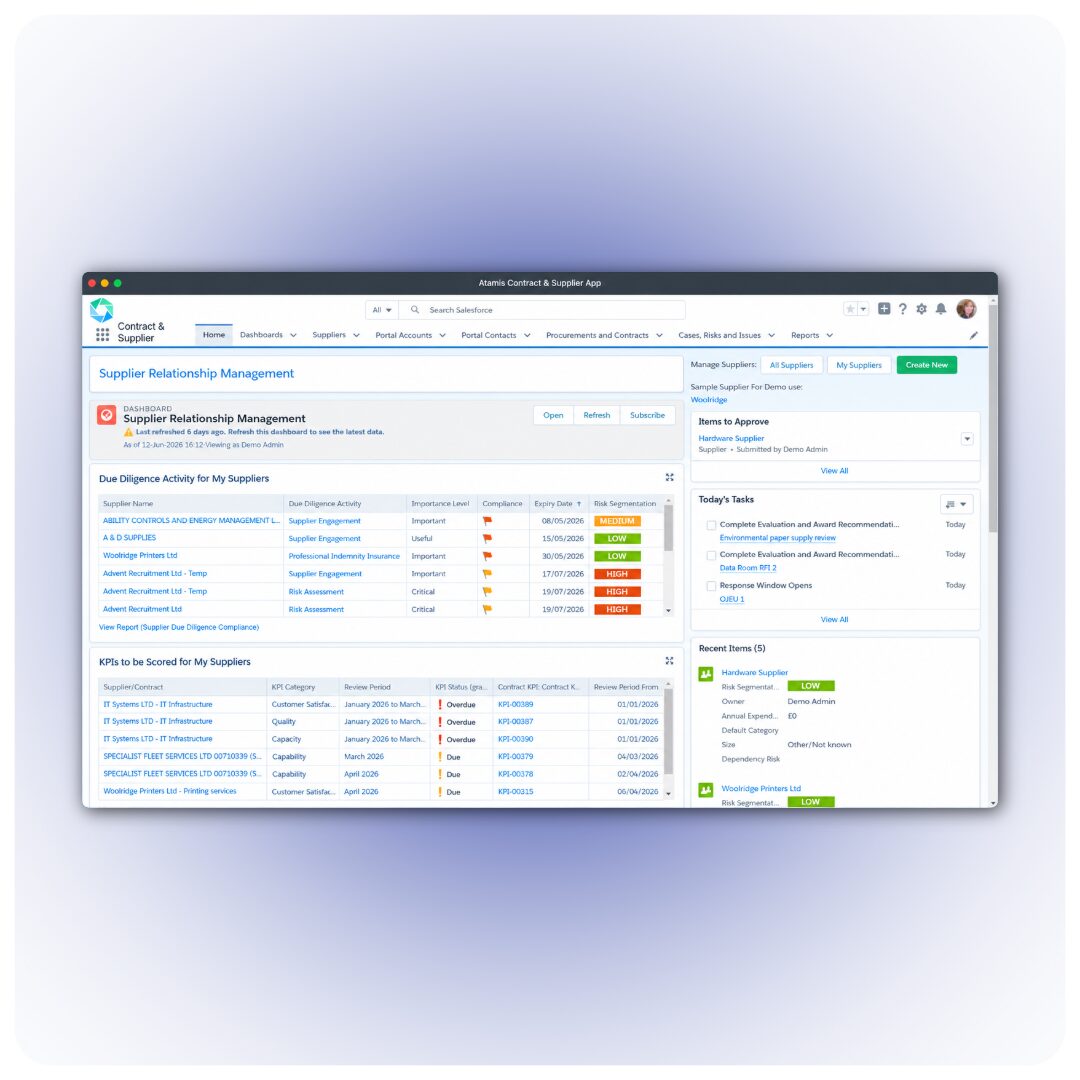
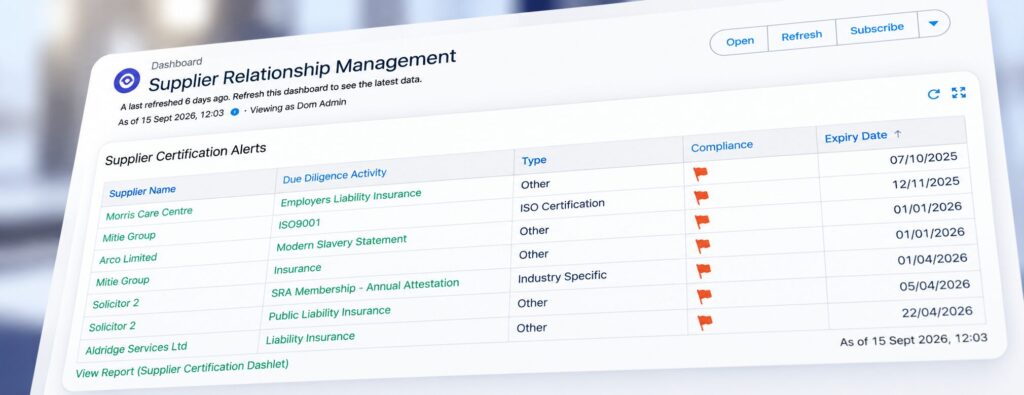
One view of every supplier. Bring supplier information together in one place.
Create a central, up-to-date record of supplier information, contacts, contracts, performance, risks and activity, giving procurement teams the context they need to manage relationships effectively.
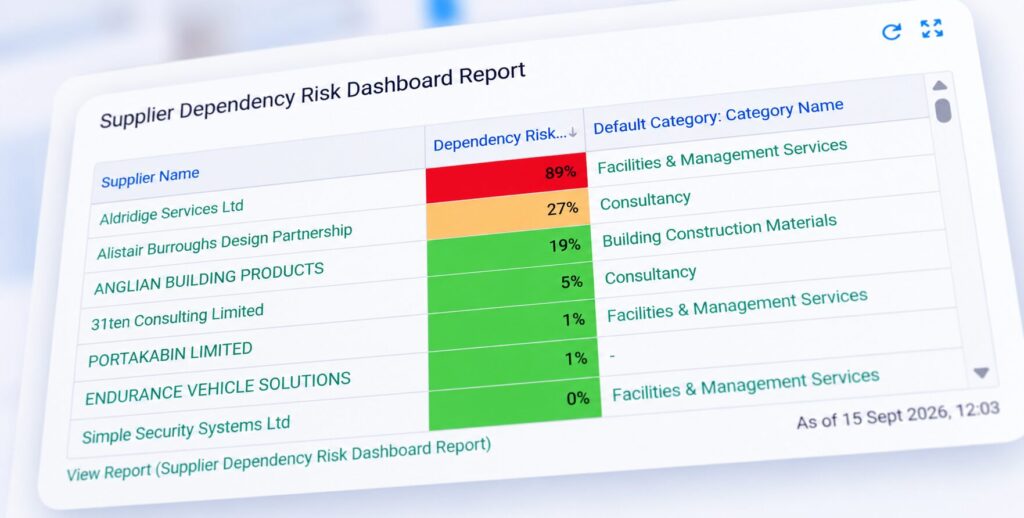
Segment and prioritise your suppliers. Focus procurement effort where it matters most.
Segment suppliers by value, criticality, category, risk or other criteria to apply the right level of governance and relationship management to every supplier.
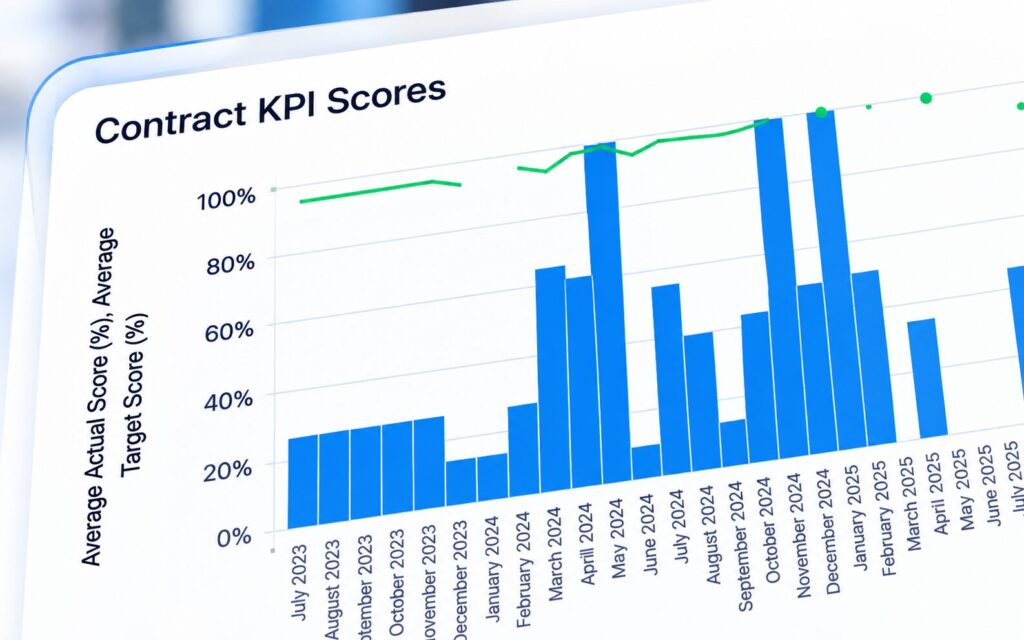
Monitor supplier performance. Turn supplier performance into something you can actively manage.
Set KPIs, SLAs and performance measures, capture review outcomes and track performance over time so teams can identify issues early and hold suppliers accountable.
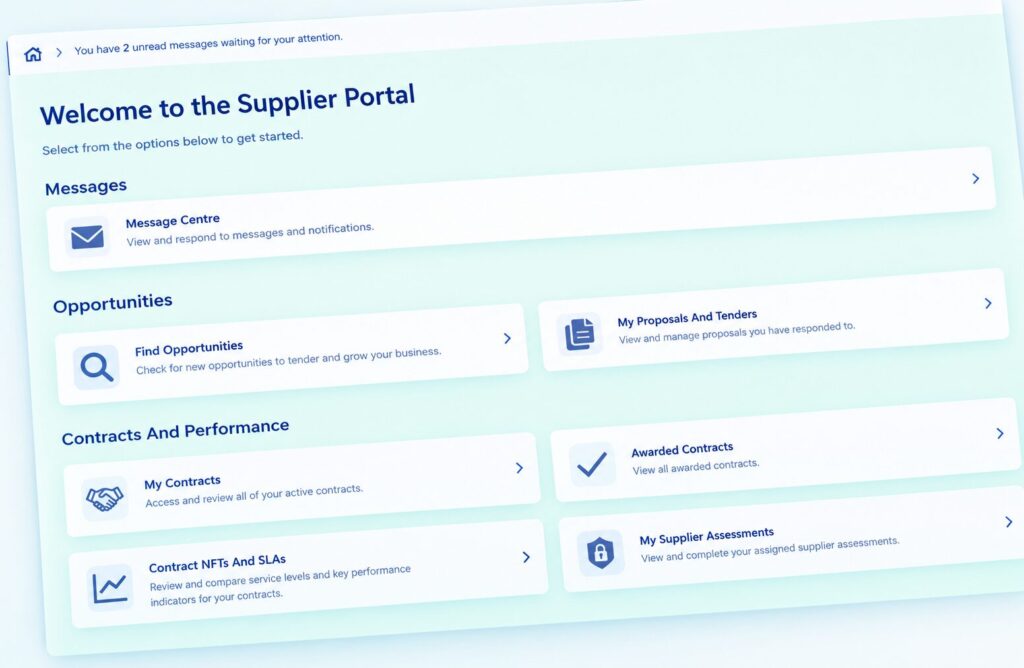
Collaborate with suppliers. Create a more efficient way to manage supplier interactions.
Give suppliers the ability to provide and maintain relevant information, respond to requests and participate in ongoing procurement processes, reducing administrative effort for procurement teams.
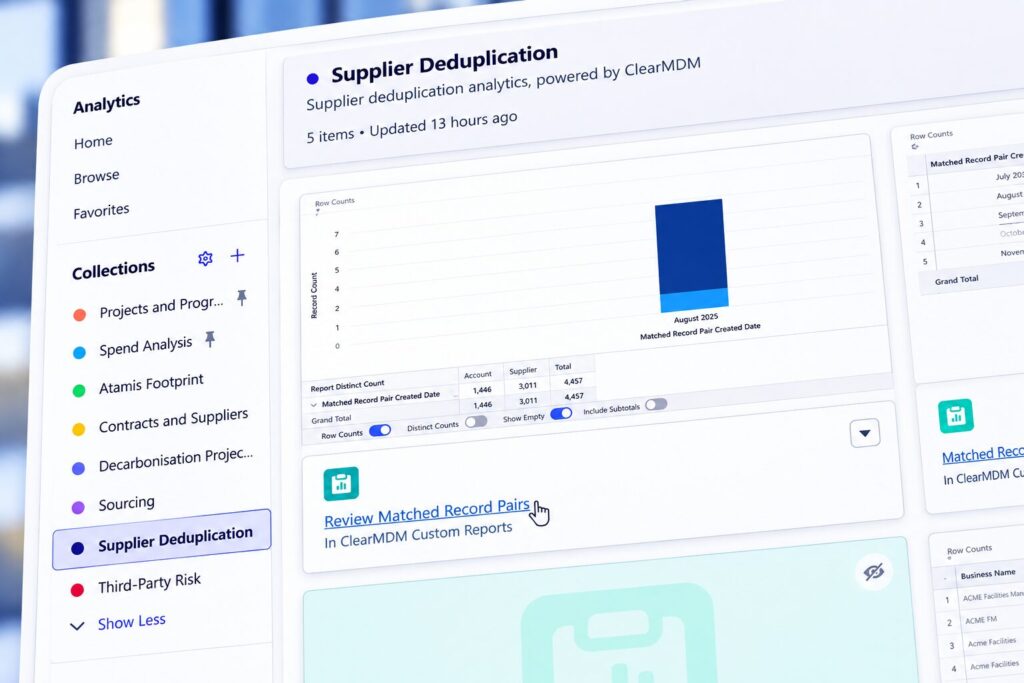
Keep supplier information up to date. Give procurement teams confidence in their supplier data.
Create structured processes for collecting, reviewing and maintaining supplier information, deduplication tools help organisations improve data quality and reduce reliance on fragmented spreadsheets and email.
From reactive supplier management to stronger relationships
Bring supplier information, performance, risks, issues and interactions together in one place, giving your team the visibility and control to manage relationships proactively.
Before
Managing supplier information across multiple systems.
Finding out about supplier risk too late.
Chasing suppliers for updates and information.
Tracking performance manually across spreadsheets.
After

See every supplier in one place.
Identify and manage risk proactively.
Give suppliers a self-service way to engage.
Manage KPIs, SLAs and issues in one place.

Get more from your supplier relationships
See how Atamis can help your procurement team bring supplier information, performance, risk and contracts together to manage suppliers more proactively.
FAQs
What is supplier relationship management (SRM)?
What is supplier relationship management (SRM)?
Supplier relationship management (SRM) is the structured approach organisations use to manage, measure and improve their relationships with suppliers. It covers activities such as supplier performance management, risk management, reviews, KPIs, SLAs, actions and ongoing collaboration.
Effective SRM helps procurement teams move beyond simply managing supplier transactions and build stronger, more productive relationships with strategically important suppliers. By bringing supplier information, performance data and actions together, organisations can identify issues earlier, improve accountability and support continuous improvement.
Why is supplier relationship management important for procurement teams?
Why is supplier relationship management important for procurement teams?
Supplier relationship management gives procurement teams greater visibility and control over how suppliers are performing throughout the relationship. It helps teams monitor commitments, identify risks, manage issues and ensure suppliers continue to deliver against agreed expectations.
A structured SRM approach can also strengthen collaboration between procurement, internal stakeholders and suppliers. By regularly reviewing performance and tracking agreed actions, procurement teams can address problems earlier and create a clearer basis for supplier improvement and strategic decision-making.
What is the difference between supplier relationship management and supplier management?
What is the difference between supplier relationship management and supplier management?
Supplier management is the broader process of managing suppliers throughout their lifecycle, including onboarding, information management, compliance, risk, performance and contractual requirements.
Supplier relationship management focuses specifically on developing and maintaining effective relationships with suppliers, particularly those that are strategically important to the organisation. SRM typically involves performance reviews, relationship management, KPIs, SLAs, improvement plans, risks and actions.
The two disciplines overlap, but SRM places greater emphasis on ongoing supplier performance, collaboration and value creation.
How does supplier relationship management software improve procurement processes?
How does supplier relationship management software improve procurement processes?
SRM software enhances procurement by providing real-time insights into supplier performance, automating approvals, and ensuring better alignment between business needs and supplier capabilities. It also supports negotiation strategies and supplier risk mitigation.
What does a supplier relationship management process involve?
What does a supplier relationship management process involve?
A supplier relationship management process typically involves identifying strategically important suppliers, establishing performance expectations, agreeing KPIs and SLAs, regularly reviewing performance and managing risks, issues and improvement actions.
The process should provide a consistent way to capture supplier information and performance data, record review outcomes and assign actions to the appropriate people. Regular supplier reviews can then be used to assess performance, address problems and identify opportunities for improvement.
For larger organisations, technology can help standardise this process and provide a centralised view of supplier relationships across procurement and other stakeholder teams.
What are the key components of an effective SRM strategy?
What are the key components of an effective SRM strategy?
An effective SRM strategy typically includes supplier segmentation, clear performance measures, regular supplier reviews, defined KPIs and SLAs, risk management and structured processes for managing issues and actions.
It should also establish clear ownership for important supplier relationships and define how performance information will be shared with internal stakeholders and suppliers.
The most effective approaches are proportionate to the importance and complexity of each supplier. Strategic suppliers may require more frequent reviews and detailed performance management, while lower-risk suppliers can be managed through simpler processes.
How does supplier relationship management improve supplier performance?
How does supplier relationship management improve supplier performance?
SRM improves supplier performance by giving procurement teams a structured way to establish expectations, measure delivery and address issues. Clear KPIs and SLAs provide measurable standards against which supplier performance can be reviewed.
Regular reviews also create an opportunity to discuss performance with suppliers, agree corrective actions and monitor progress over time. By recording actions, owners and deadlines, procurement teams can maintain accountability and reduce the risk of issues being lost across emails, spreadsheets or separate systems.
This creates a more consistent approach to identifying underperformance and supporting continuous improvement.
What is supplier performance management?
What is supplier performance management?
Supplier performance management is the process of measuring and managing how effectively suppliers are meeting agreed contractual, operational and service requirements. It commonly includes monitoring KPIs, SLAs, quality, delivery, service levels, costs, compliance and other supplier-specific measures.
Supplier performance management is an important part of supplier relationship management. It provides the data and structure procurement teams need to understand whether suppliers are meeting expectations, identify areas of concern and work with suppliers on improvement plans.
What supplier performance metrics should procurement teams track?
What supplier performance metrics should procurement teams track?
The right supplier performance metrics depend on the organisation, category and supplier relationship. Common measures include delivery performance, quality, service levels, response times, SLA compliance, contractual compliance, cost performance and issue resolution.
Organisations may also track category-specific measures such as sustainability, risk, innovation or customer satisfaction.
The most useful KPIs are measurable, relevant to the supplier relationship and linked to agreed expectations. Tracking too many measures can make supplier reviews unnecessarily complex, so procurement teams should focus on the indicators that provide meaningful insight into supplier performance.
How can procurement teams improve supplier collaboration?
How can procurement teams improve supplier collaboration?
Procurement teams can improve supplier collaboration by establishing clear expectations, maintaining regular communication and creating structured opportunities to review performance and discuss improvement.
Supplier reviews should provide a two-way forum rather than simply focusing on problems. Sharing relevant performance information, agreeing actions and giving suppliers visibility of priorities can help create greater accountability and transparency.
Centralising supplier information, KPIs, actions and review records can also make collaboration easier by ensuring procurement teams and suppliers are working from consistent information.
How does SRM help procurement teams manage supplier risk?
How does SRM help procurement teams manage supplier risk?
SRM helps procurement teams identify, monitor and respond to supplier risks as part of the ongoing supplier relationship. Regular performance reviews can highlight issues such as declining service levels, missed SLAs, unresolved problems or other changes that may require attention.
By combining supplier risk information with performance data, issues and actions, procurement teams can build a more complete picture of supplier health. This can support earlier intervention and help teams prioritise attention on suppliers where performance or risk requires closer management.
What is supplier relationship management software?
What is supplier relationship management software?
Supplier relationship management software is technology that helps procurement teams manage supplier relationships, performance and ongoing activity in one place. Depending on the platform, this can include supplier information, performance reviews, KPIs, SLAs, risks, issues, actions and reporting.
SRM software replaces fragmented approaches such as spreadsheets, email chains and disconnected records with a more structured way to manage supplier relationships.
For procurement teams managing large or complex supplier portfolios, SRM software can provide greater visibility of supplier performance and make it easier to standardise relationship management processes.
What should you look for in supplier relationship management software?
What should you look for in supplier relationship management software?
When evaluating SRM software, procurement teams should consider how well it supports their supplier relationship management processes from performance measurement through to reviews, actions and reporting.
Useful capabilities can include configurable KPIs and SLAs, supplier performance tracking, supplier reviews, risk and issue management, action tracking, reporting and dashboards. Integration with other procurement and contract management processes can also help provide greater context around supplier relationships.
Ease of use, flexibility, data visibility and the ability to give relevant stakeholders access to the information they need are also important considerations.
How can supplier relationship management software help manage supplier KPIs and SLAs?
How can supplier relationship management software help manage supplier KPIs and SLAs?
SRM software can provide a centralised way to define, track and review supplier KPIs and SLAs. Procurement teams can establish the measures that matter for each supplier, record performance against them and use the results as part of regular supplier reviews.
Rather than maintaining KPI information across spreadsheets or separate documents, a dedicated system can make performance information easier to access and report on. It can also help teams identify where performance is falling below agreed standards and track the actions required to address it.
How can SRM software provide a single view of supplier performance?
How can SRM software provide a single view of supplier performance?
SRM software can bring supplier performance information into a centralised environment, combining measures such as KPIs, SLAs, reviews, risks, issues and actions. This gives procurement teams a more complete view of the health and performance of individual supplier relationships.
A centralised view can also make it easier to compare performance across suppliers, identify recurring issues and provide relevant stakeholders with consistent information. For organisations managing large supplier portfolios, this can reduce reliance on disconnected spreadsheets, emails and locally held information.
How does Atamis support supplier relationship management?
How does Atamis support supplier relationship management?
Atamis provides a connected approach to supplier relationship management, helping procurement teams manage supplier performance, KPIs, SLAs, risks, issues and actions within the wider procurement environment.
Teams can use Atamis to establish supplier performance measures, monitor results, manage supplier reviews and track actions through to completion. Bringing this information together helps procurement teams maintain a clearer view of supplier relationships and performance.
Because supplier relationship management sits alongside other procurement processes in Atamis, teams can connect supplier performance and relationship information with the wider context of their contracts and procurement activity.